Sunday, 26 March 2023

Adm Ronnie Pereira warmly remembered on his centennial birth anniversary.(Courtesy Medals and Ribbons Apr-June edition)


RONNIE PEREIRA: EXAMPLE IS THE BEST NAVY ORDER!

(Vice Admiral Suresh Bangara & RADM Sudarshan Shrikhande)


If Admiral Ronald Lynsdale Pereira, the Chief of the Naval Staff from 1979-1982,  were to have his way, no books or articles about him would have been written. He would have probably chewed us both and called us “sycophants” at best, or good-for-nothing time-wasters prefixed with a torrent of “technical” words that flowed so easily off his tongue when he was angry, which he often was! In the 1993 Quarterdeck annual magazine of the Navy Foundation, (an organization for retired officers)    he delivered a far more polite rebuke to the editor. This is what he had to say:

Quarterdeck started as the most delightful magazine for keeping the retired and serving communities together, but you have recently begun to overpower its contents with articles about and by Chiefs. I find this out of tune, too long, and rather boring. It should be filled with light and refreshing articles, and reminiscences that are short and humorous. I do not really think you want pages and pages of how I made it, and why I did this, that or the other. The less Chiefs make their presence felt, the better for the magazine.”


Quite obviously he was unhappy that some reminiscences about him were included somewhere and that may have got his goat. Of course, the articles must have been well-intentioned and written to “bring Ronnie to others,”, especially to the serving readership, but Ronnie wasn’t made that way.        


Making his Presence Felt, Even if he Didn’t Want it!

Nonetheless, while he was dead right about the Quarterdeck,  Ronnie has had an enduring presence in the mind-space of the Indian Navy. As authors, we both had different levels of contact with him as briefly described below, some of it in the first person.

Suresh Bangara was a young officer in INS Delhi in 1967 when he first encountered the formidable Captain Ronnie Pereira. “Reflecting only on leadership qualities that Adm Pereira possessed, there could have been no better opportunities than observing him from the rank of Captain-in-command of the old cruiser INS Delhi, through the higher ranks he rose to and finally as the CNS when he  was a Commander at NHQ. “I shall refrain from commenting on the first contact as I myself was at an impressionable age. If there was one thread that ran through not until retirement but even after, was his belief in constantly focusing on the man behind the machine and fighting for his wellbeing, not just welfare. A simple example would do. Accommodation for married officers was a critical aspect at Delhi which had a common roster for all three services. Many had to move to NOIDA which meant travel by bus from the common pool. Missing a scheduled departure after working hours had financial and time penalties.

In his very first meeting with the Directors and Deputy Directors at around 1715 hrs asked those traveling by bus to leave the venue. It was a message showing concern as also his belief that working late is not necessarily a sign of efficiency.”


Sudarshan Shrikhande saw much lesser of Admiral Pereira. “He was the Chief Guest for our   NDA (National Defence Academy) 56th course Passing-Out-Parade and his speech was mainly about honour, simplicity, and the meaning of officership. Later, in my  letter of condolence to Mrs. Pereira dated 30 Oct 1993, I  recounted: “I have kept watch in the Taragiri when he sailed in her as Chief in 1981 and felt his deep conviction for the welfare of the men and officers. I have faced his righteous wrath while a midshipman at the sloppy marching of our Squad at Cochin. I remember his ringing words about the honour required of an officer when he passed us out of the NDA in June 1979.”


There is  Need to Reason Why!

Notwithstanding the different degrees of “close encounters of the Ronnie kind,” either for a longer period or as a trainee cadet/office,  in retirement, we both got involved to different degrees in examining Ronnie’s legacy and figuring out why he began to matter more than any other flag officer and CNS in our Navy? Why did he become a larger-than-life presence that he himself never wanted? Why did someone who was “merely”  in the NDA as the Deputy Commandant and did not participate in the 1971 Indo-Pak War, end up being featured in  portrait galleries with Field Marshal Manekshaw, Air Chief Marshal Pratap Lal, Marshal of the IAF Arjan Singh and in a monument or two?

A bit of third-person explanation may again be necessary. Suresh Bangara was critical to the push and help that Commander Anup Thomas needed to enable depth of research and the writing of a tremendous book, With Pride and Honour: A True Story of Inspiring Leadership (2017), a biography of Ronnie.  Shrikhande also got involved  a bit later in 2015 and helped Thomas examine Admiral Pereira’s legacy. Both veterans have continued their conversations-- mainly via phone--  about issues of ethics and leadership where Ronnie’s life and example remain very relevant.


Making his Presence Felt, But Posthumously

Since Admiral Pereira’s passing on 14 Oct 1993 (he was born on 25 May 1923), a lot of articles were written about him. They came from all quarters of the armed forces and from his small circle of civilian friends and relatives. We can only guess that many of these reminiscences  might   have made it into the public space before his death if  social media as we know it today had existed, despite Ronnie’s allergy to “make his presence felt.” Thomas’ book and one by Brigadier Mike Bhalla are full of such recounting and well-illustrated with examples of his leadership,  impish sense of humour, booming laughter, loyalty to juniors, generosity, and selflessness. These attributes were complimented in his beloved wife, Mrs. Phyllis Pereira in full measure. For today’s generation of military personnel and in other walks of life,  Ronnie ought to remain a beacon of what most might want to be but would find difficult to be. It is these aspects that we try and examine here and try and understand as best as we can, the “why” of the inspiration that Ronnie became even before his passing.  

Ronnie did not play a direct role in the 1971 war. It is a possibility, though, that his indirect role as Deputy Commandant of the NDA from Dec 1970 to March 1973, forged future officers in useful ways. However, Ronnie was himself forged by the Second World War as an emergency commission officer in the RINVR (Royal Indian Navy Volunteer Reserve). Anup Thomas mentions that his first preference was to join the British Indian Army in the footsteps of his father (who was a  doctor)  and his brother (Engineers). At the last minute, it seems he upped  his choice to  RINVR.  As recounted in separate chapters, his war experience and his clear priority in ships and ashore were towards combat readiness, seamanship and engineering efficiency, and the morale of his crew. That is, fortunately not an uncommon set of priorities we find in the Navy,  and that is how it should always be.


Thou Shalt NOT  Compromise on Values

Where Ronnie was different from many,  was in his uncompromising honesty, morality, and integrity. These virtues are not as common in leaders, including military leaders as they ought to be. In a reply to the condolence letter, referred to earlier, Mrs. Pereira wrote with much economy of words, “Ronnie’s strength-- both physical and moral—came from his unshakable faith. His rights and wrongs were so clearly defined.”

It seems that his value system, his moral code and the force of his character, when combined with his other leadership traits and persona, contributed to the reputation he had throughout his service.  But, more so, it seems to be his moral code, his clearly defined “rights, and wrongs” that transformed him into the  legend he became  so soon after his retirement. In some ways, a few events in the decade-plus after his retirement were somewhat disturbing and embarrassing  for a considerable proportion of the Navy.   From the late 1980s to well into the 1990s, a small number of senior leaders did not give a good account of themselves. The examples or individuals are not our concern here. Suffice it to say that there were rather widespread perceptions of  manoeuvreing and/or unfairness in writing of ACRs (Annual Confidential Reports) of and by flag officers, or for vital appointments or indeed jockeying for the top appointments of CNS. To add to this, some went to court; selective leaks appeared in the media, and so on.

Washing dirty linen in public, certainly not with the intent of improving service conditions, was against the ethos and traditions of any military. As expected, perceptions of the negative impact on the Service varied depending on the seniority of the officer. Since social media did not exist, largely the sailors remained unaffected. Seven years into retirement, Ronnie reluctantly agreed to deliver the keynote address to the officers of the Southern Naval Command, at Kochi about leadership. It was a stunning mix of oratory, emotions, and the unshakable belief he had in the value system that he stood by whilst in uniform. The audience in the auditorium got to see and hear the quintessential “Ronnie P” at his best.  So powerful was the impact that over two decades later that speech found its way to Youtube!  (Here is the link for “Inspirational Speech by Admiral Ronnie L. Pereira”  (https://www.youtube.com/watch?v=XB2ppN4tv60).


Ronnie and the Slender Rope of Hope   

The essence of Ronnie could be summarised thus: he simply walked the talk and was seen by his juniors to have done so “always and every time.” For him, leadership by example indeed was figuratively, the best “Navy Order” (a term used for laying down orders covering a host of naval tasks and purposes).  More than that, his example seemed to be far more relevant in the years when he himself was sadly moving towards his own last sunset. In his letter of condolence to Mrs. Pereira, (then Lt Cdr Shrikhande) wrote, “The IN has undoubtedly lost the finest Chief we ever had. The Admiral lived a life that many do not have the moral courage for…I have come across midshipmen and sub-lieutenants who know of him…”  

All this pointed to the older generations, who knew Ronnie in uniform-- and younger followers who knew of him—to think of Ronnie’s ethical nature and moral courage as his defining legacy. It is perhaps the slender rope of hope of his life as legend and legacy which the Indian armed forces’  future leadership needs to consider and use it to forge itself to be ever stronger even when the rope may feel slender. Indeed, we would urge that Ronnie Pereira’s life and character provide a beacon, an ideal far beyond armed forces to every walk of life and every level of leadership.   


Above all, Leaders are Human and Have a Wart or Two

A noticeable characteristic of much biographical writing in India on military leaders becomes fawning and hagiographical. We tend to deify them as perfect humans, almost godly. Ronnie might have guffawed at the thought about anyone and certainly about himself, adding-- for good measure—a dose of ungodly profanity. Admiral Pereira had warts but, who doesn’t?

One was his temper. He could, and did lose his cool at people and this often was  a problem. True, this did not happen at sea where he could be cool, collected and forgiving, especially if he knew people were trying their best. At times, his temper tended to shut down conversations. Consequent silences in the corridors of power in NHQ could deny him the contrary opinions he would have or ought to have  gladly heard. At other times, he could embarrass himself somewhat if he took off someone’s less-than-perfect cap on parade and stomp on it. One supposes his profanity might also have upset a few now and then. Three points may be mentioned. First, for those times, such expletives could roll off quite a few officers’ tongues rather easily, even as some others who were not only fine, but even great leaders did not do so. Second, Ronnie not only cooled down very quickly, he also never hesitated to apologize.  Third, he had an obvious heart of gold and all around him realized it and we suppose, they too forgave him if for his occasional trespasses! His empathy, concern for the larger welfare of all hands and enforcement of discipline were hallmarks. These have been illustrated well in all that has been written about him. Essentially all these stories are true, even if they may have acquired some burnish in their retelling.      

  A few things could get his goat, though including unethical behavior, especially corruption involving financial matters, and abuse of position and privilege. His own post-retirement life, his austerity, and his purchase (and serious accident on the scooter he owned as the only personal vehicle) after retirement are simple markers. There are stories about his wrath when he was in the Navy at even allegations of wrong-doing in a case or two.

Ronnie was a fine seaman and an excellent gunnery officer. As VCNS and CNS, though, he did seem to have some difficulty in seeing the utility, despite the struggle in terms of time and cost it might take,  to go in for nuclear propulsion. In his biography and elsewhere this is given deeper treatment. It must be said, though, that he “allowed himself to be dissuaded from taking a very firm position” and deferred to staff opinion. The Navy, BARC, and DRDO did collaborate to make nuclear-propelled submarines, even if Ronnie was not enthusiastic about such steps.


Ronnie died relatively young, at the age of 70 from cancer, borne stoically. “He coined no slogans, wrote no self-congratulatory memoirs. He merely did one rare and precious service. He led by example. It is the only style of leadership that ultimately counts” is how Shrikhande concluded his short letter of condolence.

What Admiral Pereira might have wanted was to always see Armed Forces where this style of leadership remains precious,  but not rare.    Such is the legacy that he left behind that a young Lt Cdr Anup Thomas  was inspired to research and write a book 27 years after the Admiral passed on. Ronnie P will be long remembered and his presence felt!


Monday, 16 January 2023

FACING THE TIGER AT TADOBA

 TADOBA-THE TIGER RESERVE-TIPS FOR TOURISTS

A suggestion too tempting to decline. I had heard about Tadoba Andhari tiger reserve (TATR) just a three-hour drive from Nagpur, the orange city of India. And so, when my daughter-in-law Avantika invited me to join the Bangaras’, off we went. 

Much has happened in the tourism sector in India, mainly due to seamless connectivity through air, highways, rail, and inland water infrastructure development. 

In 2010, Tadoba had just 3 resorts to accommodate tourists. Today there are over 40 resorts to cater to the wide-ranging budgetary limitations not only of the increasingly peripatetic Indian tourists but also the international demands. From 100 who were employed in the tourism sector here, it has grown to 4000 local stakeholders. From 19 tigers, the 2018 census says they have 106, in an area of around 1726 sq km. 

While Google would assist the data-conscious reader, this viewpoint narrative aims to assist the average traveler to configure her travel plans. 

Where To Go

As Nagpur is a convenient airport for disembarkation, the tourist has to decide on any or all four zones with multiple gates of entry. Each zone extends from 80 km to 180 km. We opted for Zone 1 i.e., Moharli.  The journey of the first 150 km is easily done on a 4-lane highway. The 30 km of the second stretch is narrow and rough. The Toyota Innova is a convenient vehicle for a family + baggage and is included in the all-inclusive package. The Airport is fairly well laid out and is quite convenient for ingress and egress.

On the advice of Sapna who runs a travel agency called Jungle Road, we chose Jungle camp for boarding and lodging.

In the event, we were quite pleased to be located in close proximity to the three Safaris we undertook. Two in daylight and one on a moonless pitch-dark night.

What to see

While the tiger was our priority, the drive of 4 hours through the jungle provides sightings of spotted deer, sambar, bears, crocodiles in lakes, wild dogs, leopards and more. What must be borne in mind is that there is a possibility of not sighting a tiger or a leopard on every safari. Hence, the need to book for three including one night. Flora and fauna are icing on the cake depending on the preference of the tourist.

Our first visit from the Devada gate turned out to be productive from a unique perspective. The specially fitted-out Gypsy with two three-seaters higher than the driver's cabin and open to the environment appears unsafe at first sight. However, we get involved in looking for pugmarks on narrow pathways while on the move. With a bit of training, we too began watching out for pugmarks even as the jeep swayed gently between narrow pathways. 

It was on one such stretch that while the tour guide seated in front of the cabin and the driver were sure that a tiger had just crossed, my granddaughter Jahnavi seated in the rear elevated seat, leaned across and whispered that a tiger was seated just where we passed. In the silence that followed the driver began to reverse and there within almost touching distance was this beautiful beast yawning and bored to see these humans who drive around!

It was both exhilarating and scary to see him so close but unmoved by our presence. Cell phones are banned in the jungle and only digital cameras are permitted. The guide knew his name and that he was recently wounded in a leadership fight with another male and was defeated. But a fully fed Tiger is no threat to man or beast and they do not hunt in day time unless it is inevitable. Finally, as we continued to stare in total silence and with the jeep's engine switched off, he gave us another bored look and faded away into the jungle. To top it all no other jeep in the safari sighted a tiger in the 4 hours they had. So round one was won by Jahnavi Bangara.

The second safari at night through Agazari yielded no sighting. But the sheer experience of riding with headlights and stopping to spot wildlife through powerful torches in perfect silence is an experience to cherish. It was freezing, to say the least, despite wearing our jackets and blankets provided by the resort. The moonless night sky was full of stars and planets that our new generation hardly gets to see in urban skies. In addition, we needed to be silent to hear the warnings of birds and deer to spot the predator.

Neither the guide nor the driver carries firearms for self-defence. That speaks volumes of their knowledge and ability to coexist with wildlife. No different from what was taught to me in the 1950s in coffee estates. 

The third safari during the day daytime through the Moharli gate and the core area of the jungle reserve, turned out to be the most productive. Despite it being a Sunday and with the maximum number of jeeps permissible looking for the tiger, one was sighted relaxing after a kill overnight. Quick exchanges of sighting information shared by the guides led all jeeps to converge on the site. Telescopic lenses and camera shutters were seen and heard all over. People tend to violate the silence mode with excitement or fear. Not a happy sight, but the Tiger seemed to ignore it.

Then came the pièce de résistance. Since the safari began early in the morning, a breakfast halt with a not hygienic washroom facility was the recommended site. Out came the packed breakfast provided in containers by the resort. The rising sun began to provide warmth after a freezing drive. There were discussions, albeit sotto voce, among guides and drivers about the possible sighting of the queen of Tadoba with her cub heading our way. 

Then came a proverbial loud bark from a Samba or a barking deer. That was it. Drivers and guides scrambled faster than fighter pilots on interception missions. Many converged on the area, and there she was. Having had more litter than normal, she seemed a bit cadaverous or emaciated, but in control of the movement of the cub. Mother and cub walked past the line of jeeps while the eager beavers with cameras went berserk.  She did not appear to care. In this case, Mankind appeared to be less civilized and caring in comparison. If she had let fly even half a roar, the jeeps would have crashed into each other. 

That very nearly happened in the next encounter soon. The convoy of jeeps was to split in many directions, but was in a column formation when a bear in search of insects and honey emerged from the trees. All the jeeps froze for the show of cameras. Out came a telescopic lens, trying to get the closest shot. It was evident that the bear just wanted to cross the road. The guides understood his intentions but the column would not move. That is when he let out such a roar that people with cameras must have wished they had used the washroom a while ago. A sensible driver pulled out of the column, allowing the bear to majestically cross the road. 

Perhaps a pee-gate story in the making!!

When to visit 

Sighting of animals is the objective that underlines a visit to Tadoba. Colourful between February and April. From March to June, trees shed their leaves. Increased sightings near waterholes are possible.

July to October is the best, post-monsoon, when waterholes and lakes are full.

Carry warm clothes from November. 

Happy tours and safaris. 


Tuesday, 13 September 2022

HOW WILL THE TATAS TURN AROUND A SHIP WRECKED AIR INDIA?

 DON’T JUDGE THE PERFORMANCE OF AIR INDIA IN TRANSITION

MODERATING CUSTOMER EXPECTATIONS

The post-COVID recovery of air travel, both domestic and international have seen a very rapid increase in passenger load. Air India/IA had long ceased to be the front runner in the domestic segment owing to the prevailing competitive environment. Having virtually run it aground, the Govt took a wise decision to privatize the airline. Given that Air India on privatization was prevailed upon to retain the personnel for one year, no apparent changes can be expected to the services provided to the customer as a whole until the new dispensation kicks in.

Ergo, the option to consider flying Air India becomes viable in the international sector, especially for the non-stop run to various locations in the USA. Very few agents would provide guidance on the best fares as also the services provided to passengers. Having opted to fly Air India from Delhi to Newark and back which included the domestic segment from Mumbai to Delhi too, my observations on Ground staff, Aircrew, and Lounge facilities are contained in the succeeding paragraphs. The sole intent is to assist those passengers not aware of the interim challenges of privatizing a public-sector, loss-making enterprise and its repercussions on providing quality services in the short term.  

Ground staff

When compared to the leading domestic agencies such as Indigo, and Vistara, it becomes apparent that the training of the Air India staff needs to be made stringent to improve passenger handling across the board. Let me start with the uniform, which perse plays an important role in enhancing their deportment and poise. I have no doubt that the new management is aware of the lack of sartorial elegance and less than acceptable communication skills among the lower segment of the ground staff. The customer/passenger is expected to receive undivided attention at all times. At the Business class check-in counter, it is disconcerting to see hordes of Air India pilots discussing the availability of jump seats or spare seats at the cost of according priority to the full fare paying customers. Changes in basic information inputs such as address at the destination in the USA being a recent addition, tend to hold up the smooth transaction for checking in.

The most jarring ground staff behavior was noticed at the departure gate from Delhi to Newark. The duty staff trickle in even as the passengers arrive well before departure. Young male employees with rough edges hang around the counter waiting to practice pre-departure announcements. It is here that their lack of skills begins to be exposed. The arrival of the more seasoned ground staff results in loud chatting on the latest gossip on turf war related to the professionalization of the airline. Meanwhile, the announcement about the final preboarding screening of hand baggage may help the passengers to line up once again, but that can wait. The head honcho arrives just in time and decides that the fitted chairs in which exhausted passengers are seated need to be uprooted and shifted to provide space for lining up the passengers. It is a comedy act except that they were recruited not as comedians. Why was I, a business class passenger watching this scene much before departure? It is because the Air India lounge had turned into a sauna. More of it later.

As soon as the last screening of hand baggage was completed and a final queue formed, I witnessed a most unusual sight. Two young employees equipped with handheld weighing machines started to randomly weigh the handbags. Needless to say, they found excess weights amounting to a payment of up to Rs 26000 in some cases as excess baggage. The modalities of payment were not clear and even worse I could not observe whether deals were struck with emotionally charged “culprits.” The employees were no different from traffic cops cornering offenders. So Chaotic was the scene that with a business ticket in hand I was being moved from queue to queue when a perfectly regal gate was available for direct embarkation of Business and First-class passengers. Quite clearly the recruitment of ground staff was not based on meritocracy but perhaps nepotism.

Lounge Facilities

Given the waiting time at each of the Airports for connecting flights, which run into many hours, one expects reasonable facilities. In Mumbai, the Adani Lounge is being shared by Air India. It turned out to be more than satisfactory in all respects. Heavenly, in this instance, as I was to discover in Delhi.

The transfer facilities from domestic to International in Delhi being an airport-run facility needs a separate discussion beyond the scope of this article. In brief, after a grueling walkathon and long queues for immigration and the prospect of waiting for five hours, one is tempted to head straight to the Business class Air India lounge hoping for a tuck-in and a bit of shut-eye.  The charming ground hostess at the desk does not consider it necessary to warn unsuspecting passengers that they are about to enter a “Sauna”. In a few minutes, one begins to realize that the ambient temperature in the rest of the airport was more than comfortable. The prospect of getting slowly roasted for six hours drives one back to the shopping zone or the boarding gate. A Hobson’s choice. When asked about the air-conditioning there is a standard response that it is under maintenance. A bit of prodding reveals that numerous complaints have been made by passengers and that a princely sum had just been expended on repairs! This is how a Govt employee would respond. Attitudinal changes would take longer based on fresh induction and sacking of the dead wood.

Ten days later when I returned, the lounge continued to be in the same state of disrepair.

The Cabin Crew

Among my generation of senior citizens, whilst in service, we often traveled Business class and later in the First class. The service was remarkably good even when the Airline was sinking deeper into debt. And so it was as expected-courteous to a fault and ever attendant. However, the lady staff were at least two notches below in performance. They looked ill-attired and exhausted as compared to the male pursers. I found purser Udupa to be one of the best. So, what was deficient? The aircraft that fly the extended route of 13 to 15 hours are the old ones of the 2008 vintage. The dream liner is reserved for esoteric sectors in the USA. What is the penalty? A large number of flight entertainment systems are non-operational. Even the graphical presentation of the aircraft position was not available to most. Thanks to laptops and notebooks loaded with movies passengers do not appear to demand inflight entertainment. That they are not available should be a cause for concern to the airline.

More importantly, the reclining seat turned bed has two versions depending on the vintage of the aircraft. Age has caught up with the mechanical system leading to unsatisfactory performance of the very system that passengers have paid for. That the cabin crew quite used to it continue to cheerfully perform their duties is noteworthy.

Finally, the pilots who are unseen and sometimes unheard too came right within my zone of observation on this occasion during my last leg of the domestic segment from Delhi to Mumbai. A large number of them who had completed their international flights rushed into business class as is their entitlement. I was perhaps the only ticket holder returning home. Their loud banter was all about why the roster for flying was skewed and what or who needs to set them right. Some dirty linen was being washed quite non- chalantly.

A Passenger’s Perspective

Quite clearly the demand particularly in Sep/Oct is rather high. High enough for passengers to pay a heavy price for non-existing facilities. Was it a coincidence that no foreign passengers were sighted in the fully booked business class and first-class zone? But to convince them that a turnaround is possible in the near term, the management may wish to communicate the reorganization/modernization plans to retain their faith in a privatized airline. Well-meaning passengers are soon likely to choose other airliners until there is plausible evidence of change in the near future. As one who followed the negotiations prior to the takeover, I would not be off the mark to expect real international standards of assets, human resources, and infrastructure to be in place earlier than 2026. I am sure wizards are working hard to change the most visible shortcomings even as midterm efforts bear fruit.

It would give us great pleasure when the Maharaja finally regains his reputation and poise and the members of the crew are attired in appropriate uniforms and once again gracefully rule the skies.


Friday, 24 June 2022

REFORMS AND REPRESENTATIVE DEMOCRACIES. {EDITED VERSION WAS CARRIED IN DELHI GUARDIAN ON 24 JUNE 2022)

 What ails India? - "We the people" or faulty structures.


The question that repeatedly haunts us is what is wrong with India when there is so much right happening around us. Why are path-breaking reforms that were pending for decades, resisted after they are legislated? The backlash to the most recent much-needed Military reforms, preceded by the farmers' bill, labour reforms, etc. are perhaps symptoms of a disease that is yet to be fully understood. Its contours are obliquely discussed in debates both in print and social media.

The first basic question is how many of us understand the difference between representative democracy and participatory /direct democracy? For the record, we are a representative democracy where the elected representatives are expected to debate, provide inputs from their constituencies and enable the passing of legislation that push India into the next century. That the parliament does not function and that all political parties play to the gallery, are there for all to see. But there is no angst, peaceful marches, or even vandalism to show our rejection of petty politics on display. Ironically, one hears seasoned journalists, academics, and educated commentators state that not enough consultations with the people have been done and hence the backlash. Really? On a variety of complex social, economic, industrial, and military legislations or executive decisions, can we have open consultations with a billion people-largely uninformed due to literacy/education-related constraints?  No.

 Another politician claimed that no consultations were held with the State Govt on the subject of Agnipath but went blank when he was confronted with the fact that Defence is not on the concurrent list. The entire Kargil review committee recommendations were handled in Delhi and major structural reforms such as the creation of the tri-service command at Port Blair and the Strategic Forces Command were executed by the PM on the advice of the Group of Ministers. Had they been open to public scrutiny none of these would have been established.

That is why we have a representative form of democracy. Here lies the next challenge. Due to the very nature of politics right from independence, sane, educated, well-meaning and knowledgeable citizens do not wish to participate in the money-muscle power-driven elections. Even the most talented, patriotic, and affluent citizen cannot hope to win an election. Criminals and those who impress the poor with material or political promises of freebies will ensure that outstanding technocrats never succeed. Hence the preferred route of Rajya Sabha for the truly deserving.  

Now, coming to “we the people.” Those of us who are educated, comfortable, and well-endowed while participating incessantly on social media and rarely in print, do not bother to vote. The only means to eliminate criminals and frauds from being elected is to participate with the EC to stem the tide of self-serving, corrupt, or even dynastic politicians. Holding the political party accountable for noncompliance with manifestos and rejecting freebies with severe fiscal and financial liabilities on much-needed public funds are essential features for reforms at the people’s end. We have a responsibility that we have willfully shunned, as we the people do not necessarily wish to participate in the process of finding the right people to represent us. The media does not believe in exposing our politicians to well-informed debates.

The latest reform concerning the Military is being debated with elected representatives who neither know the ranks and structure of the Military nor even the difference between recruiting soldiers and the selection process of officers. Just recently an educated politician referred to the former Army Chief Gen JJ Singh as Major. But he waxed eloquent on the reforms perse.

Veterans who participate in debates are guilty of indirectly accusing the present military leadership (who are the only accountable people for operations), of the most elementary consequences of such reforms: as if the knowledge resides only in them. By so doing in public, they are casting aspersions on the competence of the serving community. For the record, they all begin their argument with how timely such a bold reform is. But……and this is precisely the first red flag for creating confusion that could affect the morale of the serving community; when the serving Chiefs have repeatedly assured that they will plug loopholes as they progress.

 Perhaps such senior veterans were too busy in their careers and forgot to mentor and train their subordinates who now occupy decision-making positions. You reap as you sow.

The most important lesson is that, when a decision is taken, after consultations with stakeholders and the details are not available to the veterans, the best way is to communicate with the current military leadership directly. That would be of immense value than debating with an anchor on a TRP hunt and a panel of bumbling politicians.

Mr K Subramanyam, the doyen of the strategic community till the 1990s and the Chairman of the Kargil Review Committee, once said, “The politician enjoys power without responsibility. The bureaucrat wields power without accountability and the Military assumes responsibility without direction.”

The recommendations of the Arun Singh committee report were to specifically address this lacuna by integrating the services with the MOD and creating a single-point adviser to the RM/PM on matters military through CDS. It took 18 years to begin the process and create structures. We must learn to be patient with this newborn setup. The new CDS is likely to assume duty soon. We are moving along the right path.

But India needs significant reforms in administration, police, and judicial sectors along with labour, land, and agriculture to take her to the next level of eminence in international politics. There are enough lessons learnt to attempt all of these if there is a will.

Monday, 13 June 2022


TRYING TO REMINISCE WITH SAMIR BANGARA-CHATTING WITH AN INEXTINGUISHABLE FLAME

                                        Exactly a year ago I posted this message. https://scsbangara.blogspot.com/2021/06/in-memoriam-samir-bangara-1974-2020.html


 It has been difficult to accept that two full years have gone by since you abruptly left us. True to our understanding of life and death and the philosophy of always seeing the glass half full, I shall try to narrate my observations on the legacies you left behind.

 Sometimes I feel that a tombstone with an appropriate epitaph is a good place to chat. But then, it was with great wisdom that our ancestors chose the path from dust to dust. Your close friends made sure despite COVID being at its peak, a part of your remains was given a royal send-off at the prettiest and the holiest river site. The family watched you glide past the favourite location at the approaches to the Mumbai harbour where your mother too rested. Makes me proud of having served Lord Varuna for decades

In my last message, I said that I am willing to wager that you will not be forgotten just because you are out of sight. I am delighted that your creation, QYUKI has continued to grow in strength. Also, your home radiates your presence in all the activities. Avantika, your devoted wife,  a mother par excellence, and a caring daughter-in-law describes it as “ the Ocean of happiness he left behind”. That in turn enables us to face the roller coaster ride of life.


 And so, when I was invited to join QYUKI at the inaugural session of the well-laid out and modern office complex, I was delighted to accept it and to address all, including those who have joined the company after your departure. The old faithful lot was present even on a Sunday, but the new staff who have only heard about you were equally enthusiastic to interact with the Bangara family. Raihan and Jahnavi were equally excited for another reason. As you can see from the picture below, a massive mural of you has been strategically located on the wall of the large hall.


You know what, where ever one stands in the hall, you can be seen! Much like a ubiquitous big brother!

 On two occasions in my life, I have seen another phenomenon. First at the louvre in Paris, when one looked at Mona Lisa from no matter where in the gallery, she seemed to look at you. The second is the framed picture of your mother, which sits beside yours, now in my living room. You had got that done on that fateful day when she preceded you by two years. Her eyes appear to follow you as you move around the room. I am told it is to do with the angle of the camera shot. But who cares, so long as she makes her presence felt at all times. Who knew that I was doomed to frame your picture even before my time was up? Perhaps you are already back in another avatar to do greater good to all those who continue to touch your life.

I have not reconciled to my loss. But on reflection, my loss appears less intense when compared to so many who do not have the family support that I have. Quite serendipitously, a point-driven home often in my current occupation of assisting terminally sick patients. Perhaps a divine intervention to mitigate or alleviate my pain. It acts as a balm to my soul.


 It is heartening to see young Raihan preparing to go for higher studies this fall. People see a lot of you in him. I have no doubt that he will be guided in all that he does by that invisible hand made visible by what he carries on his cell-your hand covering all theirs on your last journey. Symbolic, and it is meant perhaps for the whole family.

When asked about the pain deep within me, a wise nonagenarian who still is my mentor, replied,” the pain never goes away but it will be filled with sweet memories with time.” Yes, thankfully time is finite as I walk into my sunset.

Take care my son-Au Revoir!

ps "If you can meet with Triumph and Disaster

And treat those two impostors just the same; ...." so wrote Rudyard Kipling in his poem "IF." My apologies for cherry-picking just what I needed now to reaffirm my faith in treating both with equanimity. 


Friday, 20 May 2022

MODI@20 My thoughts

 MODI@20 (COURTESY DELHI GUARDIAN-17 MAY 22)

STYLES OF LEADERSHIP-A MILITARY POINT OF VIEW

While watching the Modi@20 book release function on a news channel, it occurred to me that I was perhaps one of the few retired senior officers of the Military who had the opportunity to observe Modi closely for nearly four years in Gujarat. It was in 2010 when I was sitting through the interview of potential civil servants at the UPSC, that I was head-hunted by a polite senior technocrat to advise the Govt of Gujarat on an exciting infrastructure project. Having been at sea most of my naval career and having had enough to do with the bureaucracy at Delhi, I politely declined his offer. Suffice it to say, he was persistent and with a broad smile, he asked me to check the details of the project which was to be built across the Gulf of Khambat. Mesmerized by the sheer audacity of the thought behind the project, I set conditions for my acceptance, the first being that I would not report to any bureaucrat but the Adviser to the CM. I knew next to nothing about the CM.

Within the month I was in. The following four years were perhaps the most rewarding from the point of view of submitting reports based on interactions with the best experts in about 100 different areas that directly contributed to the preparation of a detailed Project Report. I resigned the week when Modi decided to head to Delhi only because the project had completed about 90 % of the compilation and I knew that without the firm hand of the CM at the wheel, it was doomed to be consigned to the bins of the bureaucracy. To those who may doubt the intent of my piece, in the preceding 8 years neither have I met Modi nor interacted with him in any which way. So, here is my take on his leadership as seen through a Military lens.

While I was determined to make my teamwork in a timely and disciplined manner, I noticed that the bureaucracy had gotten used to arriving on time and submitting reports as scheduled. The progress of files was monitored through an app at the CM's office. In all my decades of dealing with the MOD, I had rarely, if at all, seen the disciplined and time-bound progress of files.  Decision-making was swift. Most senior civil servants who were not used to computers were struggling to make PowerPoint presentations to the CM. I needed to submit my work to the Technocrat, who was experienced and senior and the decisions of the CM were recorded before I returned to Ahmedabad in 10 days. For the first time in a long career, I did not have to wait outside anyone’s office. Seemingly controversial recommendations against “conventional wisdom” of governance were not questioned except on one occasion in four years.

The CM while fully au fait with the project, was dealing with multiple issues of governance including live video conferences with Panchayat level leadership. Styles of leadership is a favourite Military theme. Having seen many top leaders of our own Military, I was able to observe the leadership traits of the CM from the sidelines without being hagiographic.

Consequently, the question that arose in my mind is how could a person not exposed to formal education and experience with Governance, be so well versed with data, facts and ask all the right questions on the subject.  So I began to compare his style with the best military leaders of my time-about 40 years-and was able to find answers to most questions. Ironically, however, the Military officers were all trained and exposed to styles of leadership before they ascended the ladder, step by step. Ergo, what then was this Modi model all about?

It has taken many years of observation after he took over as PM and despite the fact that I had predicted that Gujarat was not Delhi and that the bucket of crabs in Delhi would soon pull him down; I have had to eat my hat!

The only logical answer to my question is that serving as a pracharak gives one a rare opportunity to watch and study while working with the common man. I looked for documentation on how a pracharak is selected for grooming and traveling overseas. Modi grabbed every opportunity to watch and learn. I am yet to see a document on moulding a pracharak. Service before self, India first, and welfare of the citizen (read soldier) are all Military values too. The pracharak learns how to be professional and disciplined and not to look for gains both material and financial. Dedication to the cause that has served the Military through the decades is a very similar model.

Have you wondered why Modi walks like a soldier and more importantly salutes like one? Is he a complete package with no flaws? Of course not, but neither did I meet one in the Military-even as I adored just a few.


Sunday, 10 April 2022

 OUR SOJOURN IN KASHMIR-MARCH/APRIL2022

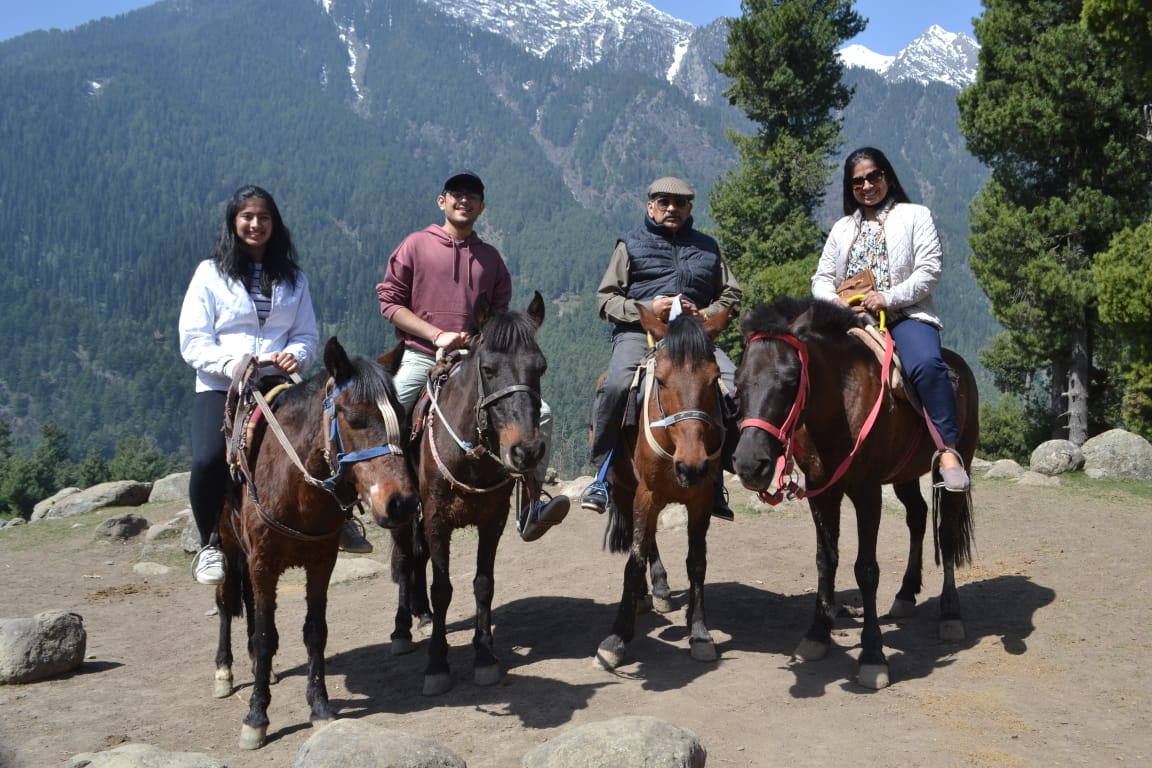
The idea of visiting Kashmir was as novel as it was timely. My grandson Raihan was about to enter the portals of an American university in autumn. He had never visited the valley which is often called the Switzerland of India.  Ironically, he had visited Switzerland a couple of years ago. Ergo, a plan was hatched to spend time at Srinagar, followed by a quick dash to Pahalgam and thence to Gulmarg. The security concern in the valley was a factor while planning this visit. It was soon relegated to the lowest priority during the visit. Having visited the valley two decades ago, it was gratifying to see the sheer number of tourists; as per official estimates 1.8 lakhs and increasing by the month. All flights in and out of Srinagar were packed to capacity. Tourist buses and taxis were pouring in along with private cars from various parts of India. 

For the local population, this has provided ample opportunities to rise to the demands of unprecedented pressure on accommodation, transportation, and marketing of their precious wares from the Dal Lake to the dizzy heights of 14000 feet. Let me describe our experience on each of these critical factors that may assist those who are fence-sitters and those who rely only on the Electronic and print media to gauge the mood of the people of Kashmir before finalizing their itinerary.


On paper, there are all kinds of accommodations to suit the purse of tourists from all segments of society. The most expensive 5* hotels were the first to declare “sold out”. At the peak of mid-March to early April one couldn’t get a room even for one night at a princely cost of Rs40000 a night (Excluding GST). However, boutique hotels with limited rooms but with personalized service were available, but by no means at the rates known earlier. Typically, visiting websites with exaggerated colour pictures of boarding and lodging facilities may not be the best option to exercise while booking. Local knowledge and/or consultations with recent visitors are essential to avoid surprises of the unwelcome kind.

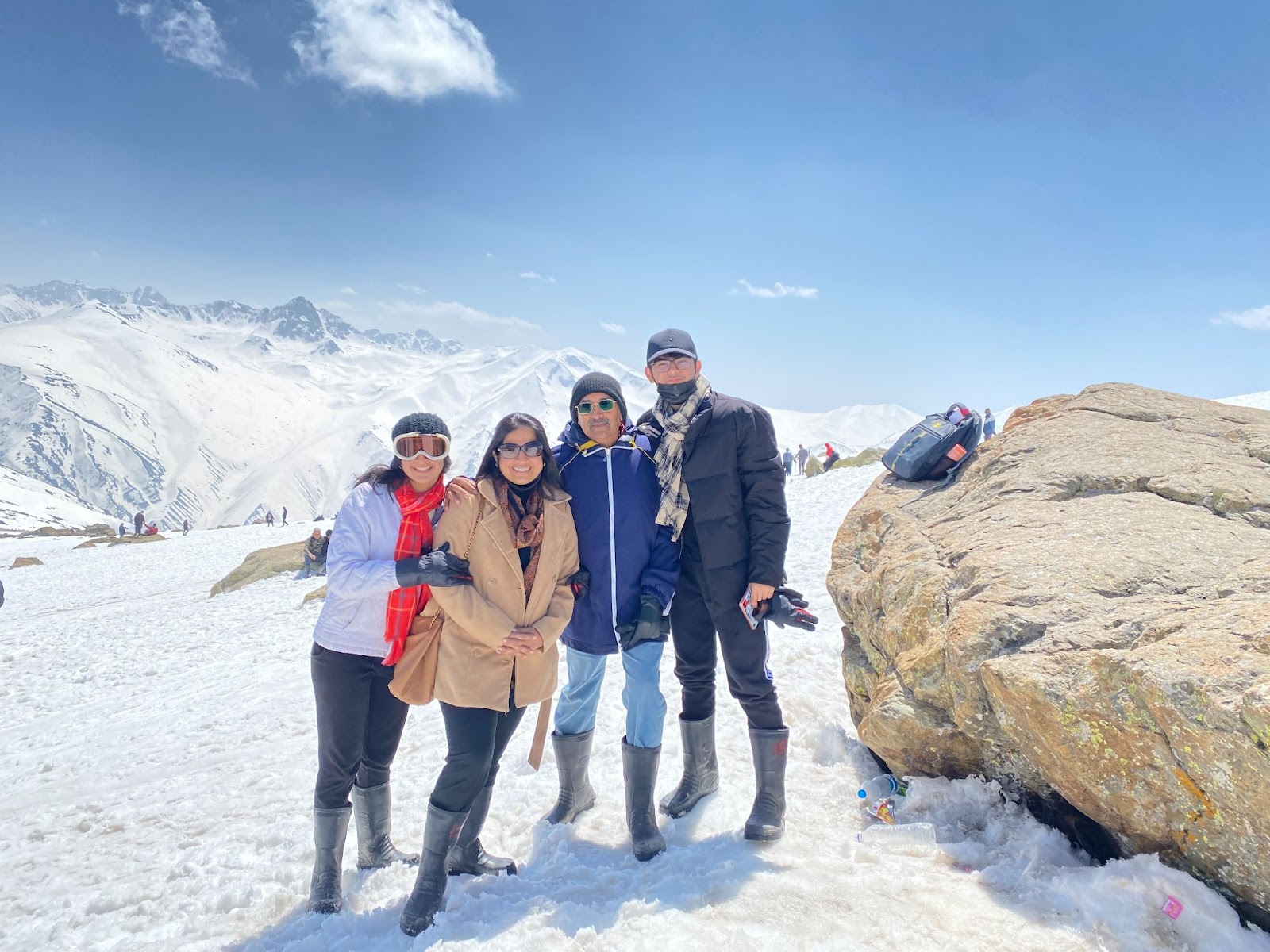
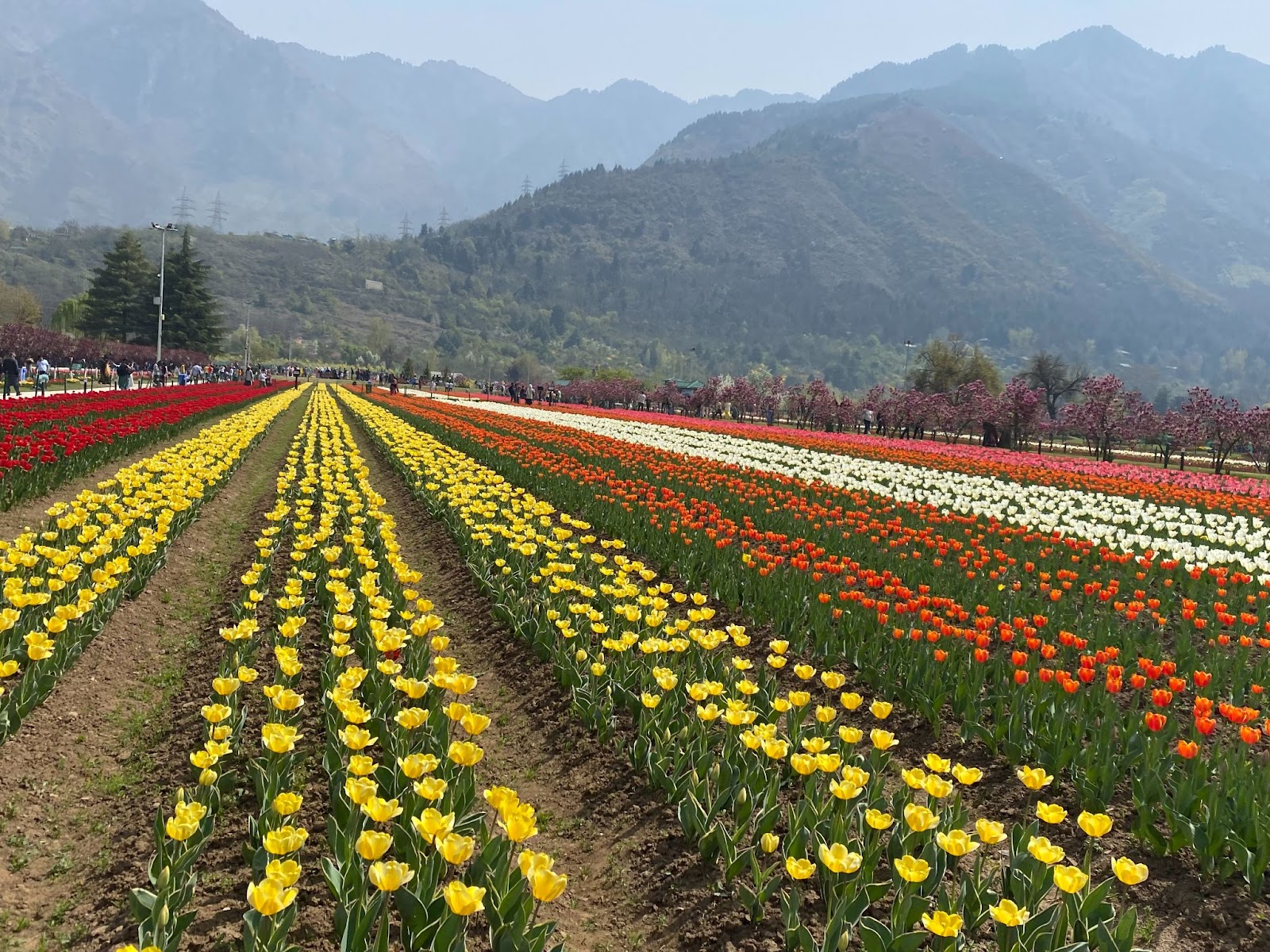
An associated factor linked to the availability of suitable accommodation is the oft-repeated question of when you should visit the valley. The short answer is through the year, depending on one’s predilections!  Strictly, the valley at its coldest in December with the heaviest snowfall is avoidable. The famous Tulip Garden is in full bloom only for a month in April. But the beautiful flowers and fruits are best viewed in July/August. If fresh snow is to be experienced, it is after October. Every week after Mid-March the next snowfall would entail proceeding to higher reaches to enjoy the sights of snow peaks. For instance, the second-highest skiing slopes in the world are off Gulmarg-about a two-hour drive from Srinagar. The cable car first takes you to about 10000 feet and to 14000 should you wish to access more snow. In April, the first stage may disappoint those who wish to roll in snow as it starts to rapidly melt. In this case, the second stage becomes a must-see destination.


In terms of organization and facilities, be warned that the mere availability of rooms at the expensive hotels at Gulmarg does not guarantee easy access to the cable car. The peak season implies that the wait at the cable car station in a long winding queue could be as long as 2hours to 3 hours if you are lucky to obtain tickets through the internet. Agents abound, but strict security and safety measures discourage VIPism. There are no small prints that tell you all this. Most tourists exit Gulmarg the same day. Taxis from Srinagar are not permitted to ply in Gulmarg beyond the pickup and drop zone. In brief, there are no local residents at Gulmarg. Tangmarg is the nearest township at the foothills. Unlike in Srinagar where digital money transactions happen, there is a need to use cash at the upper regions of hills-partly due to connectivity and largely due to ignorance among senior citizens of service providers. The new generation is tech-savvy.

Foreign tourists arrive after a fresh snowfall, mainly to ski. In any event at Gulmarg, the existing boarding and lodging infrastructure is very limited to cater to routine Indian tourists. That is likely to change when the new infrastructure plan for Kashmir kicks in. Upgrading tourist infrastructure to meet international standards would go a long way to put Gulmarg on the world map. 


Transportation is a critical cog that turns the tourist wagon wheel. Hired cars for city use for quick inter-town visits with a guide are available. However, during the peak season, the traffic is chaotic and palpably dangerous as traffic rules and road discipline are conspicuously absent in their practice. The most sought-after location of the Tulip Garden may take long to access but the pain is soon forgotten when the magnificent burst of colours hit your retina. The redeeming feature may well be loud but musical overtones of the Kashmiri language with little or no threat of a physical confrontation caused by road rage as witnessed in other cities. The only noticeable absence is the products of Mahindra on the roads. Almost all drivers claimed that the extreme winter conditions pose technical problems such as starting- not encountered by other brands.


Handicrafts and weaving skills of the people of Kashmir appear to be intact despite the negative downstream effects of the pandemic and decades of political instability. It would appear that a few good years of tourism and up-gradation of infrastructure along with an economic upturn accompanied by the entry of industry would see the emergence of a new Kashmir. 

Finally, more than staying in a static houseboat with all its novelty, a boat ride on the Dal lake opens an entirely illuminating experience of storytelling, community marketing, exposure to delicate and stunning homemade handicrafts, and insight into the traditions and culture of the valley. Salesmanship using charm, linguistic skills, resilience, and sheer perseverance are on display at all times. A visit is worth more than reading books on sales and marketing. It was exhilarating, invigorating, and breathtaking. “……hameen ast  o hameen ast o hameen ast”. Right?