Thursday, 19 October 2023

ASVINI CALLING

 MY BOND WITH ASVINI - AN UNTOLD CHAPTER


It was Feb1989. I was in command of Taragiri for well over 18 months. The President’s review of the fleet was around the corner and so was an intra-command Cricket championship - very intensely contested. I was the opening batsman for the Western Fleet and the opening bowler for COMCOS was then Cdr Srikant (later Vice Admiral - sadly a victim of Covid).


We decided to complete our last match on a Sunday, a few days before the PR. He was a well-known fast bowler and I had to live with the fact that Syed Kirmani was my wicketkeeper during my college days in Bengaluru. Much was expected, based on the whispering campaign, every time I carried my bat.


Srikant came thundering in and delivered his first few deliveries which I managed to place unintentionally between gaps for a few runs. And then it happened! I ran a cheeky single and Sri and I collided. My bat was entangled with some part of his tall torso and I went up in the air and dropped to the ground after a somersault. There was a thud and a crack near my right elbow. Breaking a finger or two during my cricketing days was par for the course. This was a bit more. Captains do not scream in pain. They scream at others. And so, I endured the journey to INHS Asvini in a rickety old jeep which magnified my pain due to the jolt caused by the worn-out suspension. I was looking forward to some solace on arrival at the ward.


Being a Sunday, only the duty MO was available. The ortho was summoned. He arrived with a grumpy face - he was otherwise known to be grumpy at best of times.  His reputation had traveled far and wide. I almost winced when I saw him. I had never been admitted to any hospital. As predicted, the ortho began by saying which Capt in his right mind would play cricket, and that too while in Command. I was moved to surgery and my elbow was fixed and my right hand duly put in a cast. I was to stay in the hospital for a couple of days and proceed on sick leave. The process is clearly laid down. After three weeks I was to report back for removal of the cast and a medical board would assess whether I could run up and down ladders of my ship.


Now comes the first part of hospital admission. My ship was to anchor at the assigned berth for the review. I had already conveyed to the Fleet Commander that my ship could operate without me. The crew had been trained. But anchoring at a review berth was not entirely what we had done earlier. Here is how we solved the problem of anchoring. The review berth as it happened was directly in the line of sight of the officer’s ward in Asvini. With a radio in hand and call sign      Eagle assigned by myself, I ran a virtual bridge with reports coming to me, and guess what my navigator and 00W needed no suggestions from me. Taragiri anchored in copybook style. My crew had proved they were as good as any. I was plotting my course of action for the following week. No standby Capt was appointed till then.


I was fit to walk and run except the cast was difficult to hide. How in God’s name would I sit around doing nothing till I was sent away on sick leave. I cast my eyes on the other patients in the ward. One was a unique character who was highly diabetic but was running the Command mess. Yet another was recovering from an accident and he needed physiotherapy on a regular basis whilst confined to a wheelchair. The third was a Harrier pilot who had a heart condition and the fourth was a service brat who had broken his leg in an accident.


Promptly, I volunteered to push wheelchairs and take them for their physiotherapy. They had not had homemade food for ages. So, we conspired to “jump jail” after rounds at night and with the mess sec who had access to a 3-tonner, we sneaked out of Asvini and had home food at my residence at Gemini. We repeated the exercise the following day while I wheeled the young patient to the US Club. What fun we thought. But “picture abhi baaki hai”.


The first challenge was a display at sea after the review. The Fleet Cdr nominated CO INS Ganga as a safety number on my bridge during my absence. That went well with the   CO complimenting my bridge crew for their professionalism.


Now came the sick leave when I twiddled my thumb at home. Restless as I was, I took a calculated risk. I tore the sleeve of my uniform and with the cast on, embarked my ship to the great joy of my officers. No one including the medical officer asked me how I could function on board during sick leave. “Don’t ask don’t tell”  was the adopted route. I had just returned after 3 full years at the Embassy of India at Islamabad.    There was an artificial halo around my head.


Next came the change of Command of the Western Fleet. There I was in NO2s and sword in my left hand and a torn right sleeve to accommodate the cast - on the flight deck of INS Virat. As the new Fleet Cdr was introduced to the Commanding officers, he approached me and since I could no longer salute, I thumped the sword on the deck with my left hand and called out the name of my ship in a gunnery voice. I was fully aware that he could have asked me how I was on parade. Perplexed as he was, he stared at me with some empathy and said, “What happened?” Greatly relieved that he asked me the “wrong question”; without hesitation and with joy, I replied, “Cricket, Sir”. And he walked past me with a nod. I survived another day, right under the nose of the Fleet Medical Officer. Thankfully, he had donned a white uniform just for this promotion. He was olive green in all his thoughts and actions. The ship’s canteen with all its goodies was the only aspect that he liked. “These crazy men in white”, he often mumbled.


The evening function in 6Bs was equally enjoyable. Here is a picture of that event.


Now came the terminal phase of my torture. Removal of the cast and a medical board to certify my fitness. Having spent all my sick leave on board the ship, I meekly admitted myself to the final phase.


Off came the cast; but what I had not factored in my plans came to the fore. My right hand had frozen such that I could not even salute. All my efforts would come to zero if I could not even salute, let alone climb ladders on the ship. The specialist advised me to return after 10 days of physiotherapy for recategorization. My pea brain just would not accept it.


I found the nearest gym which happened to be in Asvini. I took the heaviest portable weight and tried to straighten my frozen elbow. It was nothing less than Chinese torture. A combination of sweat and tears of pain had to be endured with a handkerchief stuffed in my mouth to drown the noise of a scream. Voila, by the second day, I could with difficulty raise my right hand to salute. Impressed by my efforts, the board cleared me to report back to my ship.


So ended my only tryst with a naval hospital in four decades. In conclusion, a statement made by the Harrier Pilot based on his experience during training in the UK is worthy of consideration by the present medical and executive policymakers.  It was about a Harrier pilot of the Royal Navy who jammed his fingers of his right hand while shutting his car door just prior to the sortie. One finger was damaged needing a special soft cast. The duty medical officer patched it up and told him to fly the Harrier as it was more important not to miss sorties if he could use his hand with ease.


Imposing old formats of compulsive medical leave and recategorization was found to be counterproductive in terms of time and costs if the individual could perform his duties. This eliminates shammers too!


It may be good to look at outdated medical diktats when reforms are the flavour of the day.

Friday, 29 September 2023

A MOMENTOUS RENDEZVOUS IN CANADA

Call it serendipity or just fortuitous, my plans to visit the more scenic parts of Canada, i.e., Alberta and British Colombia, took shape in May this year. It was partially based on my late wife Gita’s desire to meet up with Sukhi who was a part of a close-knit team that tirelessly and with joy, worked for the welfare of our families. What appeared to be a short visit on paper turned out to be one of the most rewarding experiences of my life. It panned out in such a way that I derived satisfaction and a great sense of pride as an Indian in what I saw. Professionally, I was overjoyed to see my old colleague assuming a leadership role in running a complex training and operational setup that very few could have imagined in 2004, almost two decades ago. Here we are, teaching the first world a few nuances of handling front line technology as experienced by us in the first decade of this millennium. Not through academic tutorship in Western universities but purely on Indian skills and entrepreneurship along with innovation. Heartwarming -to say the least.

That my visit coincided with the Justin Trudeau (JT) episode was the icing on the cake. I was able to get a real time, ground level feedback with interactions with the Indian Diaspora including an evening with the senior citizens of North Calgary.  Since this can be better captured with episodic narratives, let me dwell on this before describing the stunning and scenic beauty of the Rocky Mountain glaciers.

It is not uncommon, particularly in the Armed forces in India, to have mixed marriages and live in total harmony with freedom to practise his/her beliefs. I was such a product but from a civilian background. My late wife Gita’s mother was a  Sikhni and Father a Maratha. My two children have Bengali and Sanskrit/ Arabic names.  The next generation has done better. And so is my former naval colleague in Canada, a Bengali married to a Sikhni. So Sukhi announced a Ganesh Puja soon after my arrival in Calgary. It was no less in devotion and intensity than in Mumbai. But the participants were Sikhs with a handful of Hindus from all parts of India. The bhajans were sung with such fervour and they were not Faujis-if you thought so. This was the first introduction to ground level realities. Paradoxically, I was receiving messages from well-wishers in India to exercise caution on the streets of Canada. The power of 24/7 news channels that create anxiety and fear where none is needed, was once again on display. 

Ganesh Pooja not forgetting Gita

The ratings of JT in Canada were declining rather precipitously despite his Govt’s reported hold over mainstream media. The Canadian Army Deputy Chief Gen Peter Scott on a visit to Delhi to interact with the Indian army captured the essence of the reality. When confronted by an overzealous reporter in Delhi, he emphatically underlined the need to improve the army-to-army relations while the politicians on both sides deal with issues.

Episodic Narratives  

I was introduced to a navy veteran from India who left the navy decades ago and was presently settled in Calgary after stints in the merchant marine and industries abroad. Within minutes we realised that he was a senior sailor from the afloat support team that took care of my SAM system in the 1980’s. In turn, I was able to connect him with his old boss. Despite his success in technology-based industry, he remained rooted to the navy as we all ought to.  Grewal, spoke with so much love and respect that we shared our thoughts over delightful evenings and a long drive to see the mountains. A tradition that pleasantly surprised me, is the spontaneous effort of the young members to touch the feet of the older ones to seek their blessings. The parents have managed to encourage and sustain old customs and traditions that are on their way out in India.

Navy Veterans at Lake Louise


The second episode is about Indian senior citizens who migrated to Canada in the 1970’s. In Calgary, they meet once or twice a month before the dreaded winter sets in. Over 60 % of them are from Punjab. Much like the freedom to speak one’s mind in Hyde Park in London, they congregate at a park where after an update of news regarding developments relevant to them, anyone can narrate a joke or sing a song even if it sounds hilariously out of tune.
  They all receive the same applause. A recognition of sorts which brings much joy and laughter. Loneliness and “depression” appear to be the underlying cause.

Sr. Citizens Meeting at Edworthy Park

The Indian or Asian diaspora have ghettoed themselves in clusters where the white citizens are conspicuous by their absence. There are very few pockets where migrants share residential clusters with the whites. The Asian/Indian clusters create an ecosystem filled with Indian stores and markets of all products. While it is unlikely to promote integration with the Canadians, there is definitely a sense of lack of security and comfort that needs to be addressed. The aboriginal Canadians have been pushed to far away settlements much like the American Indians, the original inhabitants.

Some of you may be aware that Indian students aspiring to study abroad may choose Canada for several reasons. It is now an industry worth Billions of Dollars. What surprised me was that there are colleges that host a majority from the state of Punjab alone. The faculty consists of some local citizens and Indians. But as compared to the locals, the students have not come here in large numbers to be professionally competent and are quite satisfied to pass with minimum grades. Since the foreign students have to pay three times the fee, their attention is not on studies but to sustain themselves by illegally working beyond the permissible weekly limits. Work permits and obtaining status of permanent residents are the highest priority.  Given the number of immigrants entering Canada, despite the recent curtailment, it is likely to fill up low grade jobs that pay by the hour. Hence dependence as hitherto on easy means of employment for the students to sustain their education needs closer scrutiny. Spiralling cost of air travel is a major factor while balancing their fee structure with need to visit the family every year.

These valuable insights were deduced from long discussions with Sukhi’s family consisting of Sonu, and three nieces pursuing different academic paths. Japsovin, a young lad who would have made a fine soldier in our army, is now seeking greener pastures due to an accidental leg injury. Together they made good sparring partners while discussing issues on higher education in India.

Family Dinner


University of Calgary has boarding facilities and insists on in-class presence as opposed to online teaching which has assumed permanency even after COVID. That is a loophole used to advantage by those that entered the portals of Canadian institutions only to meet their ulterior goals. Professional institutions of repute that cater to Management, Finance, technology, however, are known to maintain high standards of pedagogy and attendance.

Finally, the only missing link while interacting with the Indian diaspora was their ignorance of the details of infrastructure development and scores of other technological achievements in India.  That gap needs to be filled through a well-designed digital and social media thrust that captures their attention. Punjabi is the preferred language of communication, since they form the largest segment of the Indian diaspora. FM radio channels could be so targeted not as propaganda but as valuable inputs for travel to India.

The scenic splendour

The drive leading to the Rocky Mountains is peppered by barren fields and yet segments of multi-coloured trees indicating autumn or fall stun you before you reach the most pristine lakes and glaciers at about 2300 M. There are wide choices such as lake cruise, gondola rides (cable cars), Colombia ice field adventure and sky walk and many quaint villages such as Whistler in BC enroute to Vancouver for exiting Canada, are priceless sights to see.

Alberta

Drumheller, Alberta

Drumheller, Midland Provincial Park (Dinosaur country)

Banff National Park

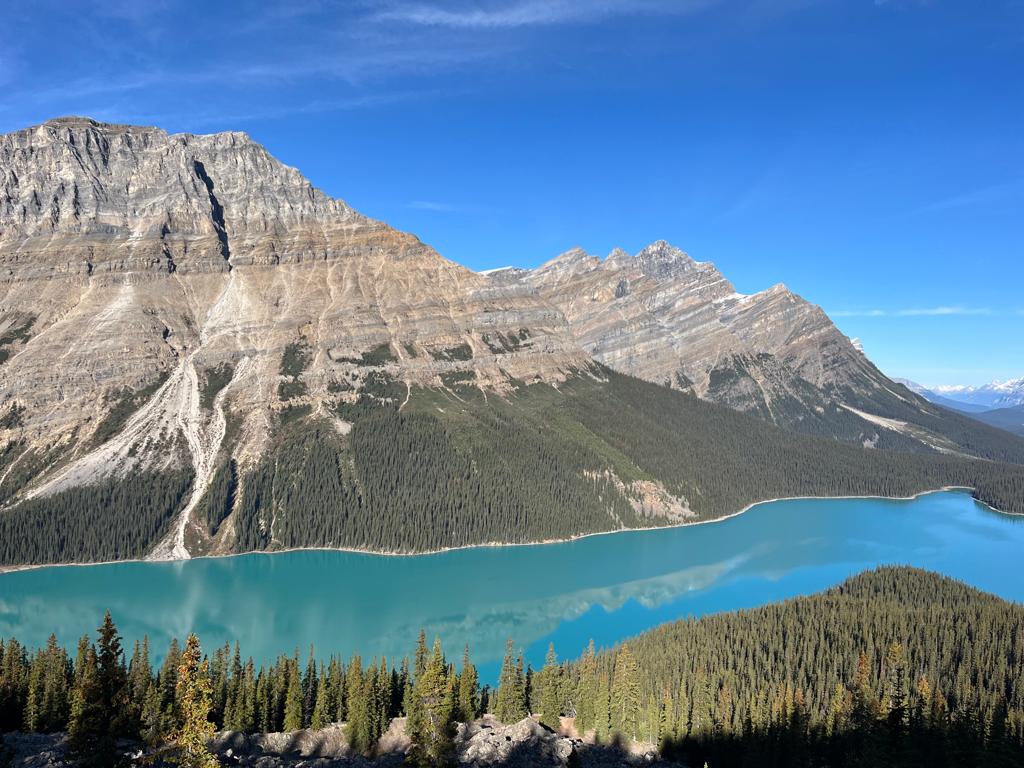
Peyto Lake, Banff National Park

Next to Lake Peyto with glaciers in the background

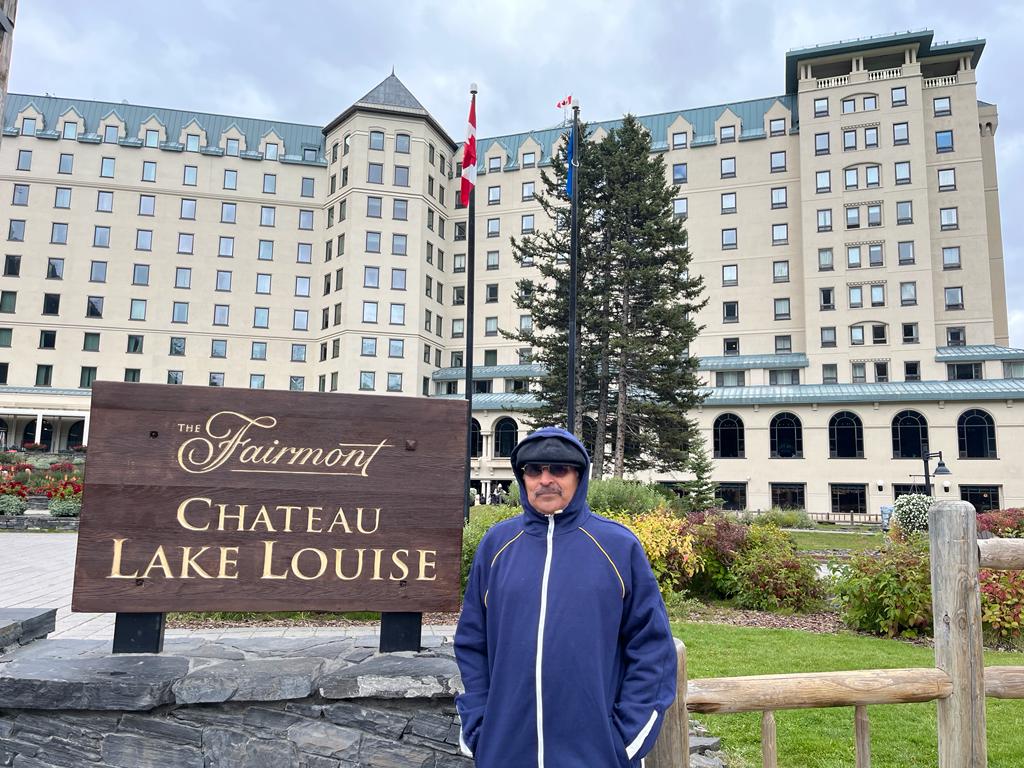
Chateau Lake Louise, Banff National Park

Lake Louise, Banff National Park

Bow Lake, Banff National Park

Hike to Troll Falls, Kananaskis

Columbia Icefield Adventure

The Ice Explorer (used to travel to the Athabasca glacier)

On the Athabasca glacier at 2300m


British Columbia

Whistler National Park, BC

Drive to Rocky Mountains

Peak to Peak Gondola at Whistler, BC

In the gondola with Japsovin

Whistler glacier seen from the gondola

But for the efforts made by Kishore and Sukhi I could not have covered so much in 10 days. The only tip I can give is to choose the time of the year such that summer vacation is avoided due to tourists and limited parking facilities. Fall or autumn would be ideal.

Nature in all its splendour is best experienced in Alberta and British Columbia.


Saturday, 2 September 2023

LIFE SAVING-A MISSION FOR 25 YEARS

 .

. YESTERDAY-TODAY -TOMORROW

SILVER JUBILEE OF RLSSI-19 AUG 23

25 years ago, Starting with swimming pools for the training of lifeguards, the very call for life-saving took RLSSI to waterfronts, saving accident victims and to road safety. Two proverbs describe their journey of 25 years. “No gain without pain” is the first that comes to mind. The second is “paddle your own canoe.” It is significant that it was in this period many NGOs, backed by resources from overseas -funding support were thriving, but it was difficult for an honest NGO to survive. That situation has changed now.

So, when Admiral and Mrs. Kavita Sharma asked me to speak today, I opted to look at yesterday, today, and tomorrow. This is a narrative to put in perspective the journey of RLSSI while India grew.

But first a couple of disclosures. We are related. That too due to a tenure in Pakistan. They briefed us having preceded us in that assignment.  The children met much later but we lived in a house called Anchorage in the heart of Islamabad. Needless to say, it was hired by His Excellency. Why do I call him HE?  That is the second disclosure. after his son a distinguished naval officer, married my daughter, in 1997, I was given a choice of addressing Adm Sharma as Purushottam. “Sir,” was easier as he was about 13 courses senior to me. But I made my choice. 'Excellency', I thought was better, until he upstaged me by addressing me as Lordship. And so, we have found a modus vivendi in all these 26 years. I call him HE and he calls me Lordship. I hasten to add that my comments today on RLSSI are from an outsider’s perspective and not as an insider. So if I have my knickers twisted a bit as I prod along it is because I merely watched them grow.

 Now coming to the subject at hand., Let me use my observations to exemplify my findings. Looking back, at three assignments i.e. ACNS IWOPS for 3 years, Commandant NDA, and CinC Southern Naval Command, I was concerned to see a large number of urgent requests channelized through MOD for rescue operations in rivers, lakes, and coastal areas. Lifesaving and more often recovering bodies were the objective. Aid to civil authorities has a structured methodology for deploying military personnel for which payment is also mandated for the logistics. However, Local pressure often resulted in political pressure for expeditious deployment. Quite simply put the laid down procedures for providing assistance were often compromised to the detriment of our carefully programmed peace-time training schedules. Emergencies such as disaster relief, and unforeseen major accidents were attended to without awaiting MOD clearance.

Kerala in particular has numerous water bodies, rivers, and backwater settlements. During monsoons, accidents occurred regularly despite swimming being a widespread skill. Since there was no formal training for life saving at any level both knowledge and equipment were non-existent. Thanks to the interaction with the then CM Ommen Chandy, I was able to convince him that requesting the navy for assistance was not the most expedient measure for routine waterfront accidents and that setting up training facilities at the village and district level would yield the desired results. I believe that suggestion was well taken and later when they heard about RLSSI, perhaps Kerala was better prepared to understand the value of training for life-saving skills as a whole.

Since some of us were born before independence we were able to understand why safety in all walks of life and lifesaving perse were not priority areas for the people. Poverty was widespread. The basic needs of roti, kapda and makan were the issues of concern. Tens of thousands died of starvation and malnutrition and lack of basic health infrastructure. Salaries were low and just trying to live was a battle. Hence death was dealt with as destiny. Thanks to rituals and faith in temples, churches, Gurudwaras and Mosques loss of life to accidents perse assumed lesser importance. It was accepted as an act of God.

. So what was the reason to be philosophical about death and lifesaving mechanisms?

The economy plays an important role in the quality of life and the ability to invest in safety-related activities and the accompanying legislative /regulatory structures depend on priorities of the day. Gradually when yesterday merged into today we witnessed the slow transformation in the form of quality control, awareness of safety standards, etc. From narrow roads connecting villages and cities, we have now reached international standards of roads. From not seeing a car or bus for miles on intercity roads to crowded and polluting vehicular traffic. From swimming in open water bodies and seas to the proliferation of swimming pools including large societies with private swimming pools.

 But demography has an equal role to play. The sheer growth of population from 340 million in1947 to 140 crores today, virtually nullifies the remarkable achievements in various sectors of life. Of course, the poor rate of GDP growth due to policies of yore accentuated the problem. Let me explain. Right from motor vehicles to building construction or even sports, safety took a back seat. A good example is the abdominal guard in cricket came decades before the helmet. Perhaps the family jewels needed to be protected even at the cost of cracking the head. I need say no more.


Even as the quality of life improved and the GDP grew to its present 3 trillion dollars, the demographic growth profile of an uncontrolled population ensured that our per capita GDP remains low as compared to developed countries. Why am I telling you this? It is because priority for issues like safety standards depends on this very factor of affordability. Just to give you an authentic figure, India’s per capita income,i.e.Total income of the country divided by its population multiplied by 100 is about 2400 $. The USA, which is not the highest, is more than 64000$. Quite simply put the per capita GDP  impacts the quality of life which includes food, housing, transportation, education and health care. Regulatory and legislative measures happen only with economic growth. So demography and economic growth are intertwined.

what are you getting at, you may ask. Let us talk of life-saving on roads. Gadkari, who has the most impressive record for building highways, as per Morgan Stanley, has increased highway building from 25700 km in 2004 to 53700 km in 2023. What does that mean? Accidents on these wonderfully built express and highways may continue to increase. Why?  violation of lane driving, non-adherence to speed limits, and lack of quality checks on heavy carriers coupled with the questionable issue of driving licenses, bogus medical certificates and poor literacy must be resolved at the State level.


Loss of lives in traffic accidents is more than deaths caused by all diseases and wars. Currently, it is 18 deaths per hour. Should he stop building roads? Of course not. Good roads are essential for the rapid growth of the economy. India aspires to be the 3rd highest economy by 2027.

Paradoxically, our city traffic is choked, potholed and filled with “near miss” situations. In aviation, it means anyone who observes a violation of established norms of operation and/or maintenance can post a message. That perhaps is to achieve the highest standards of safety. Excellency is aware of this. His generation caused enough safety violations in their younger days of fighter flying. Low flying over urban areas to impress their girlfriends and returning to base with antenna wires entangled with the fuselage of the aircraft was considered macho. Look at flight safety records now. Training, education, penalties for violations and strict adherence to mental and physical conditioning have all played a role. RLSS aims to bring in this very culture for life-saving.

Look at us on the roads. You see two-wheelers, four-wheelers, auto rickshaws, carts and cyclists jostling for space. To this add the intrepid pedestrian crossing at will by just challenging you to hit him. In a short journey, you may have 20 near misses every single day.

The good news is that more modern cars are on the road, legal and legislative processes are getting approved at a snail's pace and accidents in cities are quite under control not because we are learning but because you cannot drive at speeds more than 30 km or 10 when bumper to bumper. So, what was Gadkari’s advice to our political leadership when he inaugurated the new NDA circle? He asked that the growth of Pune should be stopped due to population and pollution. In the meanwhile, our youth is desirous of buying  Lamborghini or Ferrari to go from 0 to 100 kmph in 3 sec. Life is full of paradoxes around the globe.

Given all these paradoxes and challenges with the citizens getting richer by the day, not willing to contribute meaningfully to improve safety standards on the road or water, and the Govt’s inability to legislate laws that states need to implement but won’t, I see a great opportunity for RLSS to grow rapidly in the next 25 years.

And so, what could RLSSI do for tomorrow? Here are some thoughts from the top of my head.:

·   While pursuing state-level participation to fulfill your dream to reach out to the next Million, shift focus to tier 2, tier 3 and smaller cities before they become Pune.

·   Continue your thrust to bring in as many schools and colleges into your fold for training.

·   Pursue inclusion of life-saving drills in the national/state education curriculum. Translate existing documents in regional languages using available software.

·   Include lifesaving drills for Expressways and National highways.

·   All modern highways have helo evacuation facilities. RLSSI could contribute by conducting training for the smooth evacuation of victims from accident sites.

Continue and expand association with developed nations for training and competitive sports.

Use social media for reaching out to remote corners of India both for inviting trainees and updating information to increase your reach.

Improve the governance structures of RLSSI and make them amenable to quick decision-making, accounting, and auditing of an expanded RLSSI

Prepare documentation to seek funding under social corporate responsibility keeping in view that SME/MSME/STARTUPS are your potential funders and not large corporate bodies.

Crowdsourcing of funds is an attractive option to fund an expanding RLSSI.

Thank you all for your patient hearing.

Monday, 12 June 2023

ANOTHER YEAR ROLLS PAST-PERHAPS SAMIR BANGARA IS OMNIPRESENT

If I were to chat with Samir, here is how it would go............

You know what, I was banking on a nonagenarian who said to me that losses in life remain painful memories, but he added almost as an afterthought, that, the pain would gradually turn into sweet memories over time.

It is 5 years since your Mother left us and 3 since you did. There is no perceptible change as yet. Wise men choose their words carefully. In the event, " over time" cannot be defined as it depends on so many variables. So, I got deeply involved in voluntary activities that give me satisfaction in the quantum and quality of service that any of us, at our age, can render to society as a whole.  I know you would have encouraged me to do more.

Before your son settled for higher studies, Avantika was gracious in seeking my participation in two special sojourns: first to Kashmir and later to a tiger resort in Tadoba near Nagpur. Both were brilliantly planned and seamlessly executed.


The family preferred horse riding to see most of Pahalgam. Almost 8 hours of riding.


 Srinagar was at its best. So was Gulmarg.


Jahnavi who made us all quite proud of her performance in the last board, was also the first to spot a Tiger at Tadoba. She beat the guide by quite a margin.


And so life goes on as you can see. On a late-night safari at Tadoba, the eerie silence of the jungle and the most beautiful sky lit up with stars, I was reminded of my days in the estates, and later at sea, I wondered whether the children had ever seen such a magnificent sky and without cell phones in hand! 
Something tells me that they were wondering if you were amongst the stars. A series of shooting stars only added to the mystery. Of course, you are omnipresent. We can all feel it.
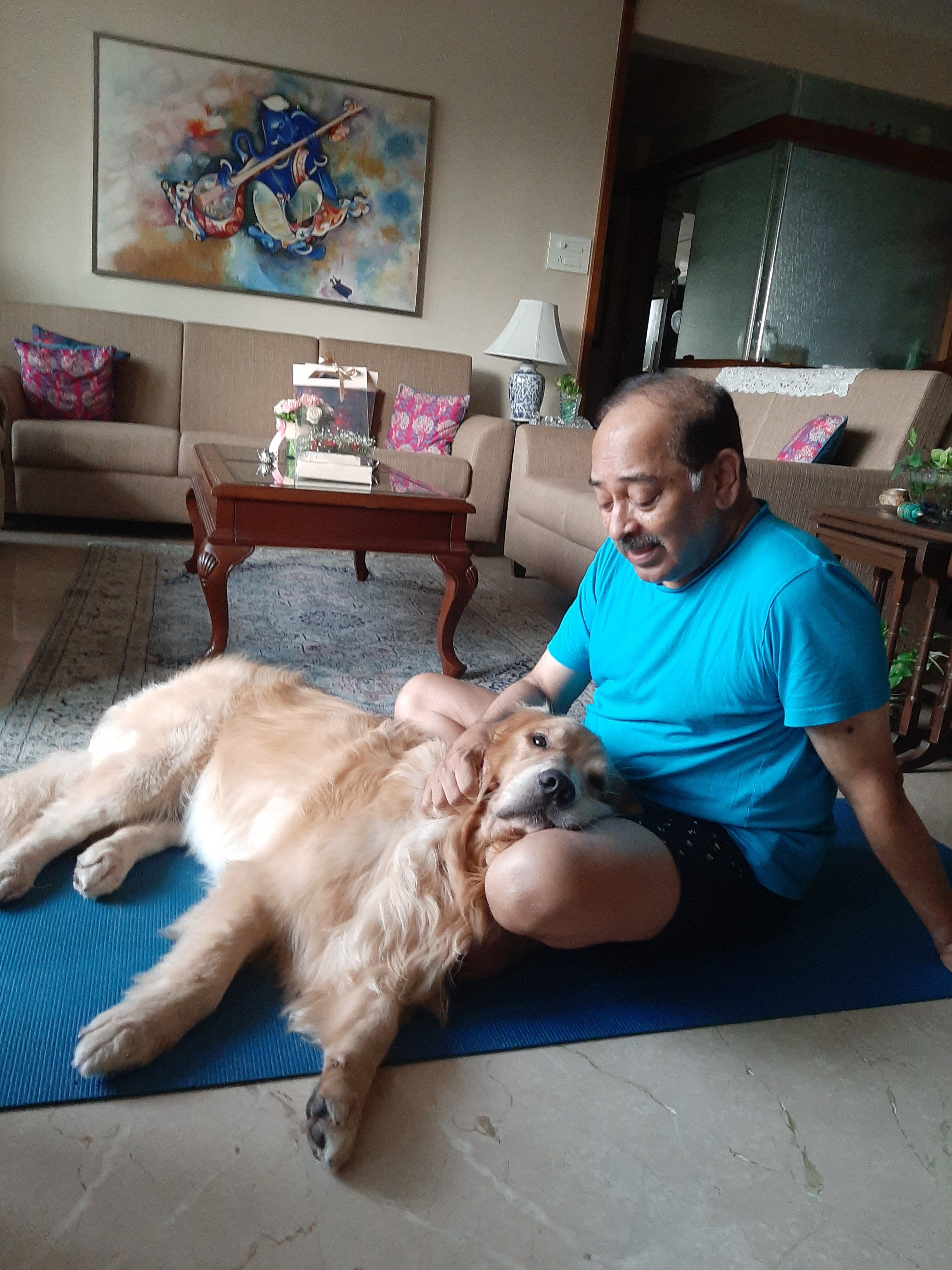
  My post would be incomplete if I don't mention the attention and companionship bestowed on me by Rossi. With a warm reception to sleeping near my feet, he expresses his special bond without fail. 
I would be remiss if I don't mention a very special Pitr Puja organized and conducted by your protege', Dolly, ably supported by Aditya. At Rishikesh and on the banks of Ganga it was so serene and tranquil. I did not have enough words to thank them for this annual ritual which is the epitome of devotion and their expression of gratitude to you, my son.

Au Revoir!


Sunday, 26 March 2023

Adm Ronnie Pereira warmly remembered on his centennial birth anniversary.(Courtesy Medals and Ribbons Apr-June edition)


RONNIE PEREIRA: EXAMPLE IS THE BEST NAVY ORDER!

(Vice Admiral Suresh Bangara & RADM Sudarshan Shrikhande)


If Admiral Ronald Lynsdale Pereira, the Chief of the Naval Staff from 1979-1982,  were to have his way, no books or articles about him would have been written. He would have probably chewed us both and called us “sycophants” at best, or good-for-nothing time-wasters prefixed with a torrent of “technical” words that flowed so easily off his tongue when he was angry, which he often was! In the 1993 Quarterdeck annual magazine of the Navy Foundation, (an organization for retired officers)    he delivered a far more polite rebuke to the editor. This is what he had to say:

Quarterdeck started as the most delightful magazine for keeping the retired and serving communities together, but you have recently begun to overpower its contents with articles about and by Chiefs. I find this out of tune, too long, and rather boring. It should be filled with light and refreshing articles, and reminiscences that are short and humorous. I do not really think you want pages and pages of how I made it, and why I did this, that or the other. The less Chiefs make their presence felt, the better for the magazine.”


Quite obviously he was unhappy that some reminiscences about him were included somewhere and that may have got his goat. Of course, the articles must have been well-intentioned and written to “bring Ronnie to others,”, especially to the serving readership, but Ronnie wasn’t made that way.        


Making his Presence Felt, Even if he Didn’t Want it!

Nonetheless, while he was dead right about the Quarterdeck,  Ronnie has had an enduring presence in the mind-space of the Indian Navy. As authors, we both had different levels of contact with him as briefly described below, some of it in the first person.

Suresh Bangara was a young officer in INS Delhi in 1967 when he first encountered the formidable Captain Ronnie Pereira. “Reflecting only on leadership qualities that Adm Pereira possessed, there could have been no better opportunities than observing him from the rank of Captain-in-command of the old cruiser INS Delhi, through the higher ranks he rose to and finally as the CNS when he  was a Commander at NHQ. “I shall refrain from commenting on the first contact as I myself was at an impressionable age. If there was one thread that ran through not until retirement but even after, was his belief in constantly focusing on the man behind the machine and fighting for his wellbeing, not just welfare. A simple example would do. Accommodation for married officers was a critical aspect at Delhi which had a common roster for all three services. Many had to move to NOIDA which meant travel by bus from the common pool. Missing a scheduled departure after working hours had financial and time penalties.

In his very first meeting with the Directors and Deputy Directors at around 1715 hrs asked those traveling by bus to leave the venue. It was a message showing concern as also his belief that working late is not necessarily a sign of efficiency.”


Sudarshan Shrikhande saw much lesser of Admiral Pereira. “He was the Chief Guest for our   NDA (National Defence Academy) 56th course Passing-Out-Parade and his speech was mainly about honour, simplicity, and the meaning of officership. Later, in my  letter of condolence to Mrs. Pereira dated 30 Oct 1993, I  recounted: “I have kept watch in the Taragiri when he sailed in her as Chief in 1981 and felt his deep conviction for the welfare of the men and officers. I have faced his righteous wrath while a midshipman at the sloppy marching of our Squad at Cochin. I remember his ringing words about the honour required of an officer when he passed us out of the NDA in June 1979.”


There is  Need to Reason Why!

Notwithstanding the different degrees of “close encounters of the Ronnie kind,” either for a longer period or as a trainee cadet/office,  in retirement, we both got involved to different degrees in examining Ronnie’s legacy and figuring out why he began to matter more than any other flag officer and CNS in our Navy? Why did he become a larger-than-life presence that he himself never wanted? Why did someone who was “merely”  in the NDA as the Deputy Commandant and did not participate in the 1971 Indo-Pak War, end up being featured in  portrait galleries with Field Marshal Manekshaw, Air Chief Marshal Pratap Lal, Marshal of the IAF Arjan Singh and in a monument or two?

A bit of third-person explanation may again be necessary. Suresh Bangara was critical to the push and help that Commander Anup Thomas needed to enable depth of research and the writing of a tremendous book, With Pride and Honour: A True Story of Inspiring Leadership (2017), a biography of Ronnie.  Shrikhande also got involved  a bit later in 2015 and helped Thomas examine Admiral Pereira’s legacy. Both veterans have continued their conversations-- mainly via phone--  about issues of ethics and leadership where Ronnie’s life and example remain very relevant.


Making his Presence Felt, But Posthumously

Since Admiral Pereira’s passing on 14 Oct 1993 (he was born on 25 May 1923), a lot of articles were written about him. They came from all quarters of the armed forces and from his small circle of civilian friends and relatives. We can only guess that many of these reminiscences  might   have made it into the public space before his death if  social media as we know it today had existed, despite Ronnie’s allergy to “make his presence felt.” Thomas’ book and one by Brigadier Mike Bhalla are full of such recounting and well-illustrated with examples of his leadership,  impish sense of humour, booming laughter, loyalty to juniors, generosity, and selflessness. These attributes were complimented in his beloved wife, Mrs. Phyllis Pereira in full measure. For today’s generation of military personnel and in other walks of life,  Ronnie ought to remain a beacon of what most might want to be but would find difficult to be. It is these aspects that we try and examine here and try and understand as best as we can, the “why” of the inspiration that Ronnie became even before his passing.  

Ronnie did not play a direct role in the 1971 war. It is a possibility, though, that his indirect role as Deputy Commandant of the NDA from Dec 1970 to March 1973, forged future officers in useful ways. However, Ronnie was himself forged by the Second World War as an emergency commission officer in the RINVR (Royal Indian Navy Volunteer Reserve). Anup Thomas mentions that his first preference was to join the British Indian Army in the footsteps of his father (who was a  doctor)  and his brother (Engineers). At the last minute, it seems he upped  his choice to  RINVR.  As recounted in separate chapters, his war experience and his clear priority in ships and ashore were towards combat readiness, seamanship and engineering efficiency, and the morale of his crew. That is, fortunately not an uncommon set of priorities we find in the Navy,  and that is how it should always be.


Thou Shalt NOT  Compromise on Values

Where Ronnie was different from many,  was in his uncompromising honesty, morality, and integrity. These virtues are not as common in leaders, including military leaders as they ought to be. In a reply to the condolence letter, referred to earlier, Mrs. Pereira wrote with much economy of words, “Ronnie’s strength-- both physical and moral—came from his unshakable faith. His rights and wrongs were so clearly defined.”

It seems that his value system, his moral code and the force of his character, when combined with his other leadership traits and persona, contributed to the reputation he had throughout his service.  But, more so, it seems to be his moral code, his clearly defined “rights, and wrongs” that transformed him into the  legend he became  so soon after his retirement. In some ways, a few events in the decade-plus after his retirement were somewhat disturbing and embarrassing  for a considerable proportion of the Navy.   From the late 1980s to well into the 1990s, a small number of senior leaders did not give a good account of themselves. The examples or individuals are not our concern here. Suffice it to say that there were rather widespread perceptions of  manoeuvreing and/or unfairness in writing of ACRs (Annual Confidential Reports) of and by flag officers, or for vital appointments or indeed jockeying for the top appointments of CNS. To add to this, some went to court; selective leaks appeared in the media, and so on.

Washing dirty linen in public, certainly not with the intent of improving service conditions, was against the ethos and traditions of any military. As expected, perceptions of the negative impact on the Service varied depending on the seniority of the officer. Since social media did not exist, largely the sailors remained unaffected. Seven years into retirement, Ronnie reluctantly agreed to deliver the keynote address to the officers of the Southern Naval Command, at Kochi about leadership. It was a stunning mix of oratory, emotions, and the unshakable belief he had in the value system that he stood by whilst in uniform. The audience in the auditorium got to see and hear the quintessential “Ronnie P” at his best.  So powerful was the impact that over two decades later that speech found its way to Youtube!  (Here is the link for “Inspirational Speech by Admiral Ronnie L. Pereira”  (https://www.youtube.com/watch?v=XB2ppN4tv60).


Ronnie and the Slender Rope of Hope   

The essence of Ronnie could be summarised thus: he simply walked the talk and was seen by his juniors to have done so “always and every time.” For him, leadership by example indeed was figuratively, the best “Navy Order” (a term used for laying down orders covering a host of naval tasks and purposes).  More than that, his example seemed to be far more relevant in the years when he himself was sadly moving towards his own last sunset. In his letter of condolence to Mrs. Pereira, (then Lt Cdr Shrikhande) wrote, “The IN has undoubtedly lost the finest Chief we ever had. The Admiral lived a life that many do not have the moral courage for…I have come across midshipmen and sub-lieutenants who know of him…”  

All this pointed to the older generations, who knew Ronnie in uniform-- and younger followers who knew of him—to think of Ronnie’s ethical nature and moral courage as his defining legacy. It is perhaps the slender rope of hope of his life as legend and legacy which the Indian armed forces’  future leadership needs to consider and use it to forge itself to be ever stronger even when the rope may feel slender. Indeed, we would urge that Ronnie Pereira’s life and character provide a beacon, an ideal far beyond armed forces to every walk of life and every level of leadership.   


Above all, Leaders are Human and Have a Wart or Two

A noticeable characteristic of much biographical writing in India on military leaders becomes fawning and hagiographical. We tend to deify them as perfect humans, almost godly. Ronnie might have guffawed at the thought about anyone and certainly about himself, adding-- for good measure—a dose of ungodly profanity. Admiral Pereira had warts but, who doesn’t?

One was his temper. He could, and did lose his cool at people and this often was  a problem. True, this did not happen at sea where he could be cool, collected and forgiving, especially if he knew people were trying their best. At times, his temper tended to shut down conversations. Consequent silences in the corridors of power in NHQ could deny him the contrary opinions he would have or ought to have  gladly heard. At other times, he could embarrass himself somewhat if he took off someone’s less-than-perfect cap on parade and stomp on it. One supposes his profanity might also have upset a few now and then. Three points may be mentioned. First, for those times, such expletives could roll off quite a few officers’ tongues rather easily, even as some others who were not only fine, but even great leaders did not do so. Second, Ronnie not only cooled down very quickly, he also never hesitated to apologize.  Third, he had an obvious heart of gold and all around him realized it and we suppose, they too forgave him if for his occasional trespasses! His empathy, concern for the larger welfare of all hands and enforcement of discipline were hallmarks. These have been illustrated well in all that has been written about him. Essentially all these stories are true, even if they may have acquired some burnish in their retelling.      

  A few things could get his goat, though including unethical behavior, especially corruption involving financial matters, and abuse of position and privilege. His own post-retirement life, his austerity, and his purchase (and serious accident on the scooter he owned as the only personal vehicle) after retirement are simple markers. There are stories about his wrath when he was in the Navy at even allegations of wrong-doing in a case or two.

Ronnie was a fine seaman and an excellent gunnery officer. As VCNS and CNS, though, he did seem to have some difficulty in seeing the utility, despite the struggle in terms of time and cost it might take,  to go in for nuclear propulsion. In his biography and elsewhere this is given deeper treatment. It must be said, though, that he “allowed himself to be dissuaded from taking a very firm position” and deferred to staff opinion. The Navy, BARC, and DRDO did collaborate to make nuclear-propelled submarines, even if Ronnie was not enthusiastic about such steps.


Ronnie died relatively young, at the age of 70 from cancer, borne stoically. “He coined no slogans, wrote no self-congratulatory memoirs. He merely did one rare and precious service. He led by example. It is the only style of leadership that ultimately counts” is how Shrikhande concluded his short letter of condolence.

What Admiral Pereira might have wanted was to always see Armed Forces where this style of leadership remains precious,  but not rare.    Such is the legacy that he left behind that a young Lt Cdr Anup Thomas  was inspired to research and write a book 27 years after the Admiral passed on. Ronnie P will be long remembered and his presence felt!