Friday, 6 September 2019

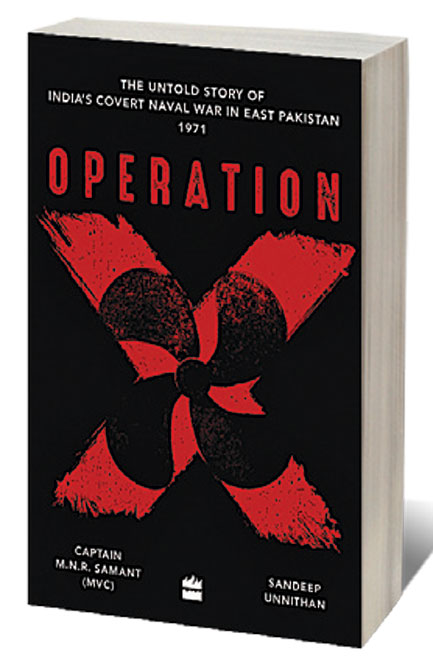
OPERATION X THE UNTOLD STORY OF INDIA'S COVERT NAVAL WAR IN EAST PAKISTAN 1971


https://openthemagazine.comhttps://openthemagazine.com/lounge/books/the-x-files//lounge/books/the-x-files/


BOOKS

The X Files

A first-rate thriller from our military history
  •  
  •  
book-img01
Operation X: The Untold Story of India's Covert Naval War in East Pakistan 1971
HarperCollins
272 pages | Rs 499

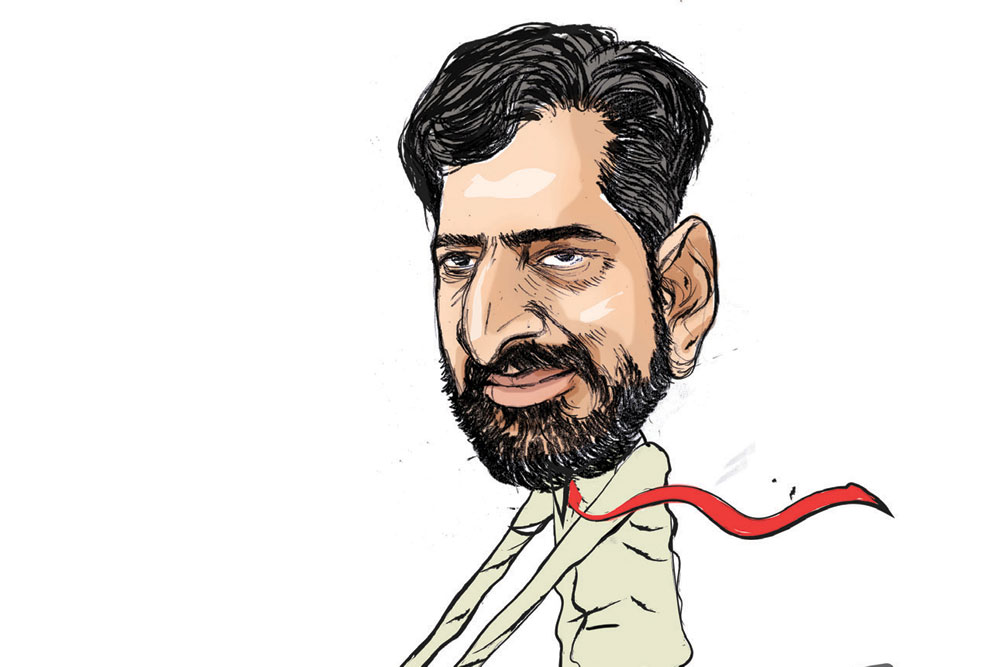
Sandeep Unnithan (Illustration: Saurabh Singh)


Wednesday, 8 May 2019

MAKE IN INDIA - SOME TWEAKING OF THE ROAD MAP FOR WARSHIP BUILDING

(This article was hosted  by Bharat Shakti on 07 May2019)
Leveraging Indian Industry for Warship Production-A Necessary Addendum to The Road Map of Make In India

Those who are familiar with the Armed Forces would know that periodic exercises under simulated combat conditions are primarily the method used to keep units combat ready at all times. In so far as the Navy is concerned, newly built warship/submarines/aircraft go through a well laid out plan of activity to prove the operational capabilities of all systems which include propulsion, sensors, weapon systems, firefighting and damage control facilities, power generation and backup systems which include emergency backup, air-conditioning, ammunition storage and a host of logistics support facilities. Every warship is equipped to fight a nuclear, biological and chemical war as well.  Thereafter the platform is put through crew competence assessments before the assigned authority inspects and declares her combat ready. It is after this certification that the ship joins the Fleet where she is integrated with multi-dimensional forces to drill her for war.

As compared to platforms of Army and Airforce, ships are like floating cities of various sizes which carry large number of personnel with facilities to accommodate, feed and support them to sustain at least three months of deployment.

These floating cities are built using several thousand tons of steel, and include varieties of engines of several thousand horse power which propel the ship using huge room sized gearboxes and long and heavy shafts ending in large propellers. The ships are also equipped with Electrical Generators of several thousand kilowatts capacity which supply electric power to various equipment starting from basic lighting, air conditioners / refrigerators, ventilation fans to a variety of sensors like Radars and Sonars for detecting enemies and weapon systems encompassing high calibre guns and cannons to guided missiles, rockets and torpedoes. Modern day warships also have very sophisticated computer-controlled combat management systems. The warships are also equipped with very complex system of piping and valves for conveying fuel, water, hydraulic power and compressed air.

When warship construction commenced in India in mid 1960s with INS Nilgiri, we obtained the design and manufacturing drawings from the British and started building our warships in MDL at Mumbai. GRSE at Kolkata and GSL at Goa soon joined the warship building effort. Later, the Cochin ship yard and HSL at Visakhapatnam too became a part of the team.

For the first few ships, as the design was from abroad, practically everything including even the steel used that went into its construction had to be imported. However gradually technologies for producing them in India were developed and more and more Indian items found their way into the warships. Stringent specifications and quality standards were established and slowly but surely Indian industries became competitive not only in costs but also in quality.

Although a lot has been done for production of warship materials and equipment by Indian industries in both the public and private sectors, a number of items such as Gas turbines and other propulsion equipment and some Radars and weapons are taking time to find indigenous suppliers. Economy of scale has been one of the impediments along with assured supply orders which was not forthcoming from the concerned Ministry. These are systemic inadequacies given the inability of the Finance Ministry to project the defence budget with any degree of certainty. Assured allocation of capital budget is a prerequisite to build war ships. From design to commissioning a Destroyer    takes a decade or more in the present system.

Every naval vessel has several hundred - and in a large ship like the Aircraft Carrier thousands – of kilometers of electrical wires and cables for supplying power and also conveying data from and to various equipment.

Even a layman knows over heating of these wires and cables either due to electrical overload or due to any other type of external fire causes the insulation to overheat, melt and burn. The insulation material, which is a polymer containing some halogen elements, when overheated, produces toxic gases like chlorine which greatly hamper the efforts of the fire fighters and sometimes when ingested result in casualties.

All the ships that were imported from UK / Russia did not have(and may not have) non-toxic wires and cables as most navies evolved their own specifications based on the capacity of indigenous industry to supply the requisite number of cables.

It was fortuitous that modern nontoxic cable technology was developed indigenously by Navy through the private sector in India. The Russian industry however, continues to use toxic cables for their warships. Our Navy was quick to harness the indigenous content by suitably modifying the cable specifications so that all new warships now under construction are equipped with it. Having lost lives due to electrical fires in the past, this measure would ensure appropriate firefighting techniques to combat electrical fires without loss of life.

Indigenous construction of warships including the first aircraft carrier at Kochi, Destroyers with state of art weapons and sensors at Mumbai and Kolkotta, conventional submarines at Mumbai and their strategic counterparts in other yards, make it imperative that top of the line accessories and materials be used in these platforms. Make in India is a mantra which is yet to reach its intended capacity. It is likely that ships now on order in Russia are not entirely utilising new capabilities that exist in India. The offset clause, interalia, is meant to create and sustain technological standards of indigenous production. But the off-set clause is not available to ships being procured from Russia, for instance. It is possible that by default we would be forced to accept toxic cables due to contractual obligations. If these assumptions are true, remedial measures need to be initiated to prevent loss of precious human lives.

It is time that we leverage the modern subsystems of higher quality being produced by the private sector in India. In all the three pillars of warship building processes to improve the platform’s capacity to FLOAT, MOVE and FIGHT, we need to involve the private sector as indeed done by ISRO, IGMDP and our own strategic submarine projects. No need to reinvent the wheel but there is a need to reinvent the attitudes of those involved in executing contracts.


Tuesday, 23 October 2018

The Quetta Experience- courtesy sniwire.com uploaded on 23 Oct 2018


§  Pakistan
The Quetta Experience: What Lessons Are There For India
Suresh Bangara New Delhi, India 23 October 2018
In the early 1980s, a book titled On the Psychology of Military Incompetence, written by Norman F Dixon, a psychologist by profession but with a military background at the Royal Engineers for a few years, caught my attention for its perspicacity and audacity. Predictably, it was the military which found the book unpalatable but it also received glowing reviews from many who even ventured to call it a “classic”.
In the book, Dixon looked at many of the wars fought by the British for over a century and a half, and later the Allies, and examined them from the leadership perspective. Based on scientific methods of critical assessment, the author was able to deduce the factors that had led to poor ‘Generalship’ and inept leadership in wars that were unsuccessfully fought. Essentially, the book pertained to the levelling down of human capabilities.
It is in this context that a recent study titled The Quetta Experience – Attitudes and Values within Pakistan’s Army, becomes relevant to all of us. The author Col (Retd) David O. Smith has painstakingly conducted a field research in 2013-14 based on interviews of U.S. Army officers who attended the Pakistan Army Command and Staff College in Quetta between 1977-2014. Primarily focussed on the attitudes and values of the Pakistan Army, the study provides an insight into the very course which shapes the minds of a selected few young officers of their service.
What is unique is that although reports rendered by officers attending foreign courses are routinely processed by almost all countries, this is the first such report in the public domain which covers a period of 37 years. This is long enough to corroborate conclusions based on individual assessments.
As far as we are concerned, some of the conclusions arrived at by Col Smith may not necessarily coincide with our thinking on our consanguineous neighbour. We do interact with them at UN peacekeeping operations and on courses conducted by friendly countries. It is true that the Indian and Pakistani officers more often than not become good friends due to factors of commonality of food, music, language and Bollywood. Even during wars there have been instances of display of human qualities not seen on battlegrounds elsewhere. However, that has partly been vitiated by the recent disrespect shown to our soldiers with their mutilated, dead bodies handed over across the border.
Coming back to the study, a number of key issues have been covered here. I will analyse four of them below and bring in observations based on my personal knowledge of our neighbour. This knowledge has been collated during courses in the U.K. U.S.; chance meetings in friendly ports; stay in Pakistan for three years during the Zia regime; my participation in CBM related issues at sea between an Indian and Pakistani group of maritime experts; and my recent participation at an anti-piracy seminar at Karachi in March 2012.
First – Demographic changes and social issues. Smith concludes that, “Fears of Islamisation within the Pakistan Army officer corps and its susceptibility to radical religious influence are exaggerated.”
At the outset, I must admit that my interactions were biased towards the Navy and not so much the Army. Given that the Army in Pakistan is all powerful, and that the other two services play a secondary role even in the joint commands, Islamisation would be steered by the Army, as dictated by the stereotypical general-turned-president of the country.
Ironically, Zulfikar Ali Bhutto along with Zia, later to be his bête noire, laid the grounds for Islamisation of the Armed Forces. Introducing special clauses in the ACR format on imperatives based on religion, identifying those prone to alcohol consumption and making religion the primary focus, were overseen by Zia during his time in power. When viewed from an Indian perspective, other critical changes such as rewriting the history of Pakistan, and thereby detaching their past from India, ensured that the alienation of the future generation was more or less achieved.
The impact could immediately be seen in the military. The Pakistan Navy, I knew then, was no different from our navy except that they had increasingly become more Americanised in their outlook. We had moved from British, to Russian and finally to a concatenated Indian model.
It is with this backdrop that I was saddened to see the sailors of PN Ships in 2011, lined up on deck looking like mullahs rather than sailors. They hurled invectives at us followed by praises of Allah as they steamed past one of our ships. This was over two decades after I left Islamabad. My datum on Islamisation changed even as I witnessed the conduct of their Army at Kargil. As a result, I disagree with Smith that Islamisation and radicalisation have been exaggerated. In fact, it is a cause for worry, if not concern for India.
Second – Perception of external threats. Smith alludes to a growing generational divide between the senior and mid-level officers. He suggests that the younger generation does not view India as a primary threat.
My observations of university students at the Bahria college at Karachi in 2012 gave me hope. Not a single student questioned me — the only Indian — about Kashmir or other controversial subjects. Instead, I was bombarded with questions on reputed colleges and institutions of India for skill development and scientific research; medical facilities and commercial activities if and when we open our facilities for South Asians. They were more than happy to interact with me with little or no anger. Their careers and future were on top of their agenda.
This tallies with Smith’s assessment, but there is a flip side which needs consideration. The younger generation which is brought up on tinkered history and Wahhabi culture get more of that when they enter service. Fortunately, Bollywood continues to allure them with songs and visuals of India. Social media does the rest to keep them up to date. Breaking of barriers of communications using WhatsApp (a double edged tool though it may be) has its merits too.
Given that the change of official history has completely alienated the post-Zia generation from their roots in India, if anything, they should be more antagonistic. Perhaps the knowledge that India has advanced well beyond their reach in academic, economic, commercial and industrial capabilities and hence militarily too, has sobered their current threat assessments.
Third – Attitudes towards the State and its institutions. The most unresolved riddle for a young Pakistani officer is democracy. That all democracies are highly flawed but survive since there are no better alternatives, is an idea which is not sellable in Pakistan.
When a General is in power the military stands to gain materially and financially. The military which runs many major commercial institutions including transportation tends to be pampered even more. Large incomes that accrue from purely military-run commercial ventures pay for more perks and comforts. On the contrary, democratically elected leaders tend to be corrupt, indecisive and poor administrators and thus contempt for civilian governments and institutions is endemic. As a result, the military officer would any day support an Army regime in Pakistan.
Fourth – attitude towards nuclear issues.Two important deductions that Smith makes here are critical. First, there is the issue about negligible material on nuclear issues in their foundation course. Use of tactical nuclear weapons and its strategic implications are not appreciated at Quetta. Such an attitude needs to change. Encouragement to pen analytical material on nuclear issues, like many Indian scholars and authors have done, is an essential pre-requisite to grow in a nuclear environment.
Second, the safety and security of the Pakistani nuclear arsenal is being repeatedly reassured even by ill-informed students of this course. Repeated reassurances in the face of internal threats is a bad sign and cannot be construed as a positive and confident gesture in relation to the safety and security of their nuclear assets.
In conclusion, there are issues on the strengths and weaknesses of the curriculum. Militaries all over are averse to changes. The “all is well” theme of the famous movie Three Idiots is a culture that should be discouraged. Continuous reappraisal of course content is often stymied by the military-bureaucracy in most democracies. Going by Dixon’s findings, one needs to beware of the military bureaucrat — he tends to be much worse when placed in a seat of power.
(The author is a retired vice-admiral of the Indian Navy and former chief, Southern Naval Command. Views expressed are personal.)

Sunday, 22 July 2018

Tribute to Admiral Jayant Nadkarni (Former Chief of Naval Staff (Indian Navy) 1987-1990)


(My tribute to Admiral Nadkarni on his demise. Dated 22 July 2018 at Pune, Maharashtra, India)

President Navy Foundation Pune, Members of the Pune chapter, the very special Golf four- ball who ensured that Adm.. Nadkarni played as long as he could, Ladies and Gentlemen.

It would be puerile on my part to summarize the naval career of Adm. Nadkarni. I know that a number of you have served under him, perhaps none here has been his peer and surely no one senior to him is present in this audience.

Exactly a year ago I paid tribute to a hero of the attack on Karachi and I began with what Gen Patton had said; "It is foolish and wrong to mourn the men who died. Rather, we should thank God that such men lived".

Adm. Nadkarni certainly belongs to that category which exhorts or commends us to Thank God that he lived and that his inherent intellect guided the navy during a very difficult phase of our growth. 1987 to 1990 saw many ups and downs in our economy and the defence budget took a beating.

Yet during his watch much was achieved and those are listed on the internet. You don’t need me to elucidate those records. What I shall do today is to tell you a few stories that have perhaps never been told before. Let me at the outset state that I came to know more about him after I retired than while in service. After all, post retirement activities are truly reflective of one’s ability to contribute to the society as a whole. Apart from being the founding member of CAAS, IMF and the Patron of MHS which he handed over to me, he was also sought after by Academics and had even contributed to the print media with some incisive articles on affairs Maritime.

That he was least flamboyant, unflappable and extremely observant is known to many. Allow me to present a couple of anecdotes, which I believe have not been recorded. But before that, this is what Adm. Awati said within hours of Adm. Nadkarni’s departure. “Podgy was an accomplished navigator who had a special touch for the Haven-Finding art which I do not see since his days at sea in a ship or as the Commander of the Western Fleet. I hope my readers understand the point I have made in describing this officer in his heyday. I experienced it first-hand. None, to my knowledge, has matched him in the past fifty years or more. The quiet, self-effacing facade hid a steely determination to do right, always and every time, by his ships and men. He belongs to that immensely rare breed of men who display character. It was forged during his difficult teens and early adulthood when he had to struggle against adverse conditions at home, facing denials.” Having been the navigator of INS Delhi, he knew that ship pretty well. He made a name for himself and that has been recorded in the history of the navy titled ‘Blue print to Blue water’. When INS Delhi, which was under long refit had to be pulled out in 1961 for gun fire support to the Army off Diu, Capt. Krishnan (later Vice Admiral and C-in-C East during the 1971 conflict) asked that his old crew and especially Podgy as the navigator should be brought back on board. The rest is history.   And so years later while in command of INS Delhi which lay at anchor at Port Blair flying the Flag of the then C-in-C East, he remained confident and unflappable.  When the Capt. was told by the Admiral that he should leave harbour in total darkness, he promptly saw the opportunity to go fishing during the remaining day light hours- with two of his ship mates. The Capt. returned on board 15 minutes prior to weighing anchor and was on the bridge wings conning the ship out of Port Blair while casually chatting with his ship mates on the successful fishing expedition. This left the C-in-C speechless and rather neglected, perhaps.

The second anecdote is when he visited Moscow in the then powerful Soviet Union, He was to deliver a pre-dinner speech. The problem was that the carefully crafted and politically correct speech prepared by his NA and the Naval Attache was left behind at the Hotel. The Admiral had merely glanced at it. When he was invited to speak and realised that the papers were not quite there, he merely waived his hand and whispered to the NA that he had glanced at the points and that was enough. He was not a great orator and yet managed to convey his message effectively.

Of the many other stories, here is a true story narrated by Prof Gautam Sen who lives in Pune. “In 1993, Podgy took her (Mrs Nadkarni} on a holiday to Europe. He was my house guest in Florence for seven days where I was a Jean Monnet Fellow at the European University Institute. She had already lost more than 60% of her vision. Every single day he would take her around Florence and give a continuous commentary explaining everything that came in the line of sight. But the most astounding thing was when he took her to the Da Vinci Museum and explained every Michael Angelo sculpture/ painting for nearly six hours. If you closed your eyes and only heard the voice of Podgy each item came to life. And there she was holding his arm listening and asking questions. Even some of the visitors trailed behind the two to listen to Podgy’s narration - an unusual display of his knowledge about art and architecture of the renaissance period to perfection. Not many may have known his deep understanding, study and appreciation of European history, its legacy of culture and the role of the Catholic Church. But what stood out was his devotion to her to ensure that she saw through his eyes exactly as you and I would see and remember Europe.” To bring him back to life today, I shall play a short extract of his interview that I recorded in March 2016, for the book on Ronnie Pereira. He was a great admirer of Adm. Pereira. He was the COS in quick succession to three legendary Admirals of our Navy. Adm. Pereira, Adm. Rusi Gandhi and Adm. Barboza. This is what he said to me.


Let me conclude this chapter with the one I have chosen from a plethora of anecdotes narrated to me during the last week when I contacted a number of officers who had served under him. His NA who is not keeping too well narrated this one. Just prior to his retirement Adm. Nadkarni noticed that the navy had begun to pursue a new penchant for pre- retirement activities. Traditional activities such as wining out, dining out and pulling out had expanded to Golfing out, in some cases ‘tennising out’ and riding out too. Hence, he enquired with tongue in cheek whether he could be ‘Kabbadeed’ out as that was the only sport suitable for his podginess.

I gave a lot of thought to how I can conclude this tribute to Adm. Nadkarni. I think he would be delighted if we gave him a theen jai. Ladies and Gentlemen please rise- “THEEN JAI KE LIYE THAYYAR-ADM NADKARNI KI - JAI…….”


Wednesday, 4 July 2018

WHY DIGITIZATION IS A BOON AND A BANE

Private sector multiplies profit while the public sector exploits  corruption.

While tremendous strides have been made to bring in transparency and efficiency in the digitized economy of India, a section steeped in corruption ensures that the old inefficient and opaque system continues to prosper . There may be many examples but one each from the private and public sectors should suffice to educate and suggest remedial measures for the benefit of the "common man".

It is a well known fact that manufacture, information dissemination, billing and collection of payment in a vast array of products have promoted greater sales of modern utility goods in the digitized Indian market. My decade old car was up for sale. Examining multiple market friendly ventures to sell used cars, I decided to explore a relatively recent player. The website promised to deliver the following;

  • Approximate sale price depending on basic parameters of the car
  • A free- of- cost 45 minutes inspection of the car including all the documents which are mandatory.
  • After the assessment of the expert,uploading the findings of the expert with photographs to the centre which then starts a process of auction among potential bidders.
  • In 30 minutes of the above to show me the lowest and highest bids. If the bid is unacceptable no further action needs to be taken.
  • In the event the bid is acceptable a 30 minute process of verification of documents and signing a joint agreement commences.
  • The above process completes all necessary signature to meet mandatory requirements for resale  as stipulated by the RTO.
  • The joint agreement then releases the seller from all responsibilities of the car.
  • Finally the accepted bid amount is transferred instantly to the bank account of the seller.after deducting the nominal service charges.
Did all this happen? Indeed. In 15 minutes after closing the deal, I had  confirmation of receipt of money in the bank. The episode would be incomplete without the last mile connectivity with the RTO. One of the mandatory checks includes a visit to the traffic police site to check on unpaid challans for traffic violations as also accident related data if any. To my surprise there was an unpaid challan for Rs400 for a traffic violation caught on camera in 2017. Since I neither received an e mail or a telephonic message I was completely  oblivious to the misdeeds of my driver, I am told that we are required to visit this site from time to time. What if no payment is done? Well, you can't sell your car until it is done. Did anyone among my friends know about this silent camera- captured violation process? Not really. Hence this explanation.

 Could I have imagined such a tear less sale of my old car? Not at all. Full use of digital technology and completion of action within hours. All with a smile and a cup of coffee too.

Now coming to the story of how the babu, steeped in procedures functions  not only to tire you but to ensure that you follow an opaque system with built in guaranteed harassment. 

My driving license was due for renewal. This being a process once in 10 years or 5 depending on ones age, one is not aware of the impact of technology on efficiency of Govt run institutions. Getting a passport for instance has been streamlined through data exchange on internet. And so I visited the portal of RTO Pune. It also led me to a site run by a private operator who claims to deliver the prized document without tears. I opted for the tear less process of merely uploading all necessary papers including photographs. It was named appropriately as itseazy.com
After a few days of exchange of mails, I was asked to pay about six times or more of the official rate for renewal. "Aha," I said, pay more for no tears.

The final communication asked me to proceed to the RTO with my old card and meet their representative at the out gate.The entrance at the RTO was a bit overpowering due to hoards of people at every counter. At the out gate it appeared well nigh impossible to locate my interlocutor. In the event I did not have to. I received a call from a man who said he was watching me while seated on a scooter and he literary guided me to his location. One look at him and I realised that he was an agent who normally swings things in any Govt office. How on earth was he connected to the web portal its eazy.com?

The supreme confidence with which he outlined his plan made me wary of him. He asked me to proceed for a medical examination which was mandatory for license. I objected stating that the web service had not asked me to appear for a medical that too at a location as crowded as this. He was completely at ease with the developing situation and merely stated that he could arrange for a medical certificate if I merely followed his guidance.

I whipped out my cell almost like a cowboy at gun fight and phoned my service provider. The agent grinned and waited for my conversation to end. I was told that it was a minor oversight and that the payment made to them would take care  of the rest. I promptly grabbed all my papers from the agent and said that I did not need any license and that too from an agent of the RTO  whose role as a" pimp "should have vanished with the transparent internet based digital process. The agent followed me and advised me that at no time did he tell me to pay for the medical and what is more, I did not have to wait for more than 2 minutes to get a certificate. That said he turned around and was back in 30 seconds with a medical certificate pronouncing me fit and signed by a medical officer with a stamp on it.That done he collected my old license and promised me that my new license would arrive by speed post in 72 hours.

It is then that I realized that the old system of the "pimp" has been reincarnated by a private website which gives the necessary confidence to the customer but which is entirely dependent on the good old agent who in turn bribes all those in the pipeline. Now you can compute the profit margin of the website, the cut earned by the agent and the bribe up the chain including the Medical officer who never saw me. It struck me that I could have been blind and yet be cleared to drive.I had electronically transferred Rs 2000 for a job which costs Rs 300.

Now I engaged the agent in conversation on how he functions. He gladly shared his insights and gave  me a business card  with a caption "Any thing to be done with RTO" Indians are known to be innovative while avoiding taxes and creating channels for bribing. It is a win-win arrangement -unbeatable in concept and meticulous in execution. In parting, he hinted that those who come to him directly would need to pay only Rs 1000.

More recently I gathered that direct contact with the RTO at the crowded counters would have been sufficient if one had the patience. Look how wisely the plan has been hatched. The common man should receive the service at the counter a bit more efficiently without paying a bribe while other middle class and above customers who have internet facility may pay more. Thus my driver renewed his license without any tears,that too-at one sixth the cost!!

The pie'ce de re'sistance was when an affluent friend from Chennai claimed that he was harassed by the RTO of his zone while an adjoining zone was run transparently and efficiently. The modus operandi at the Agent- run RTOs appear to have been standardized  at the  National level. Money makes the world go round. Try beating the system!


Monday, 4 June 2018

My Love Story


IT is exactly 60 days since I lost my dearest possession of my life. Ironically it was 46 years ago that in an old quaint theatre in the Naval base at Kochi that both of us- newly married,watched the movie Love Story. No, it is just a sad story I thought. Cancer takes away a young wife.It was moving enough for Geeta to cry inconsolably. Many in the theatre were crying . The theme song would make anyone remotely connected with the theme cry!

But then the song became so popular that much like the hit songs of Bollywood, one heard it playing over and over again. Perhaps many of the current generation have heard the song.  It was etched in my memory not only for its lyrics but due to the ambiance of the thatched roof theatre for officers and men of the Navy. There was no Television at home and the latest Hindi movies were shown in theatres in town. But the base theatre was special. It did have regular shows for Hollywood hits too. Easy on the pocket when your take home pay was just Rs 400. A very disciplined crowd. The Officers were seated at the back on cane chairs-some times with bugs crawling out. But who cared!

KV was my immediate neighbour in a hired house opposite the Cochin shipyard. The Yard did not exist. Was it a mere coincidence that he too lost Lakshmi, his dearest possession a few years before mine. Geeta could not speak to KV to console him for well over a year. Much against statistical odds, we were to be neighbours twice more at Mumbai.  Lakshmi and Geeta were inseparables- perhaps they have joined hands again Now watch the song.......  Love Story Video